


When comparing nitrile vs PU coated gloves for construction, the short answer is that nitrile foam suits oily, abrasive and outdoor work, while polyurethane (PU) suits dry, precise handling where dexterity matters most. Both are knitted liners dipped in a polymer, both are tested to EN 388:2016, and the right choice depends on the task, the climate and how often gloves are replaced.
Why glove choice matters on GCC construction sites
Hand injuries remain the most common recordable injury on construction and fabrication sites in the UAE and Saudi Arabia. Cuts from sheet metal edges, abrasions from rebar and blocks, and pinch injuries from pipe handling account for most of them. Dubai Municipality’s Code of Construction Safety Practice and Abu Dhabi OSHAD require employers to provide task-appropriate hand protection, and large contractors typically standardise on two or three coated glove types to simplify stores and training. The cost difference between a well-chosen glove and a poorly chosen one is small; the difference in injury rate and glove consumption is not.
EN 388:2016 explained
Every coated work glove sold for industrial use in the GCC should carry the EN 388 pictogram with a four-digit code plus up to two letters. The digits represent abrasion (1 to 4), blade cut (1 to 5, Coup test), tear (1 to 4) and puncture (1 to 4). The first letter (A to F) is the ISO 13997 cut level, which replaced the Coup test as the primary cut rating for high-performance yarns. The optional second letter (P) indicates impact protection. A typical nitrile foam glove reads 4121X; a typical PU glove reads 4131X or 3131X. For cut protection beyond level 1 or A, move to a cut-resistant glove with HPPE or glass-fibre yarn.
Nitrile vs PU: side-by-side comparison
| Property | Nitrile foam coated | PU coated |
|---|---|---|
| Grip in oil and light wet | Excellent (foam channels fluid) | Moderate; smooth PU slips when oily |
| Dry grip and dexterity | Good | Excellent; thinnest coating |
| Abrasion (EN 388) | Level 4 typical | Level 3 to 4 |
| Breathability | Good (foam is porous) | Good on palm-only dip |
| Heat tolerance of coating | Better; resists softening | Softens and degrades above 80 °C |
| Chemical and solvent contact | Resists oils, fuels | Degrades in solvents |
| Typical service life on site | 1 to 2 weeks | 3 to 7 days |
| Best uses | Rebar, formwork, mechanical fitting, logistics | Electrical, assembly, finishing, warehouse picking |
How to choose for the task
Steel fixing, formwork and scaffolding
Choose nitrile foam with a 13-gauge nylon or polyester liner and full or three-quarter dip for knuckle coverage. The foam resists concrete abrasion and keeps grip when the glove is wet with sweat, which matters in July on a Jubail or Abu Dhabi site.
Mechanical and piping work
Nitrile again, because fittings and tools are usually oily. Consider a sandy-finish nitrile for the best wet grip.
Electrical, instrumentation and finishing trades
PU-coated gloves in 15 or 18 gauge give the fingertip sensitivity needed for terminals, screws and small fasteners. PU does not leave residue on painted surfaces.
Warehouse and logistics
Either works; PU is lighter and cheaper for dry picking, nitrile for yards and loading bays.
Common mistakes
- Issuing PU gloves to hot-work or grinding crews, where the coating melts and the liner offers no protection.
- Using nitrile or PU gloves for chemical handling; they are splash resistant at best. Use a dedicated chemical-resistant glove tested to EN ISO 374.
- Buying on price per pair alone; a glove that lasts twice as long at 30 per cent higher cost is cheaper.
- Ignoring sizing. A glove one size too large doubles pinch risk and halves dexterity.
- Washing gloves in hot water, which cracks PU and shrinks liners.
Heat, sweat and the Gulf summer
Coated gloves become uncomfortable when the liner saturates with sweat. Palm-only dips and 15-gauge or 18-gauge liners breathe better than 10-gauge or fully dipped styles. Some nitrile foam gloves are available with micro-perforated backs. During the UAE midday-break period (15 June to 15 September, 12:30 to 15:00) outdoor crews are off site, but the morning and late-afternoon shifts still demand gloves that dry quickly between uses. Rotating two pairs per worker and drying them in shade extends life and reduces dermatitis.
Cost factors and standardisation
Price is driven by liner gauge and fibre, coating type and coverage, and order quantity. PU gloves are typically the cheapest coated option, nitrile foam sits slightly above, and premium versions with reinforced thumb crotches or touchscreen fingertips cost more again. For a site with several hundred workers, standardising on one nitrile and one PU style, each in sizes 8 to 11, keeps stores simple and lets the HSE team track consumption per trade.
The nitrile vs PU coated gloves choice depends on oil exposure and dexterity. Trial both sides of nitrile vs PU coated gloves before bulk orders. Review nitrile vs PU coated gloves usage by task.
Related guides: Nitrile vs Latex vs Vinyl Disposable Gloves: Which to Buy · Best Rigger Gloves for Lifting Operations: 6 Things to Check · How to Choose Welding Gloves for MIG, TIG and Stick: 5 Rules
Key takeaways: Nitrile vs PU Coated Gloves
- Nitrile foam for oily, abrasive and outdoor tasks; PU for dry, precise handling.
- Check the EN 388:2016 code on every glove and match it to the risk assessment.
- Neither coating is a chemical glove.
- Lighter gauge liners and palm-only dips are cooler in summer.
- Standardise styles and sizes to control cost.
Al Baraka Diyar stocks EN 388-rated nitrile and PU coated work gloves in bulk for sites across the UAE, with service to Saudi Arabia and India, along with the full range of safety products. Contact us with your trades and headcount for samples and volume pricing.
Nitrile Vs Pu Coated Gloves: practical summary
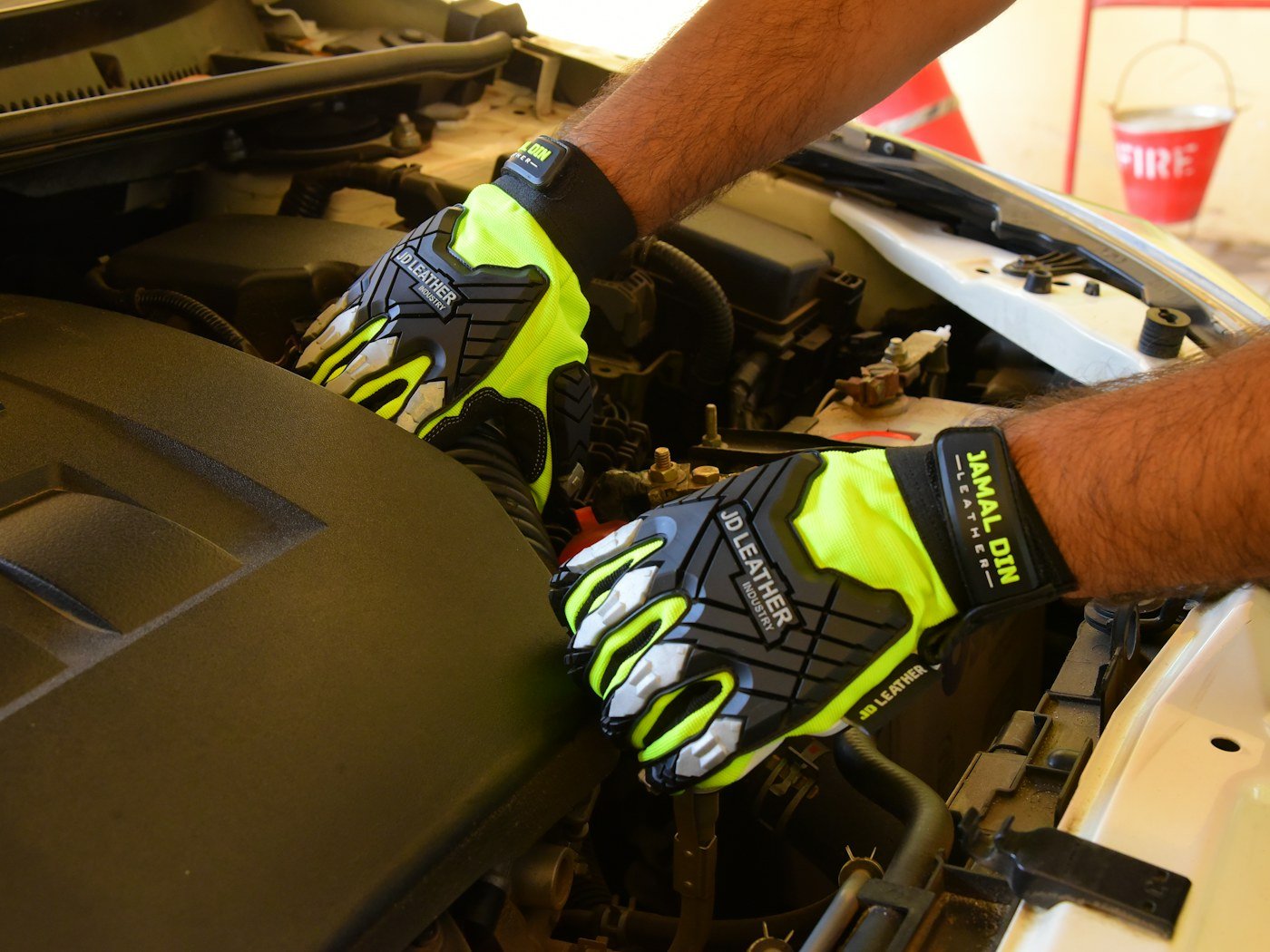
This guide to nitrile vs pu coated gloves is written for UAE work sites, and also applies to our service areas in Saudi Arabia and India. If you need help applying nitrile vs pu coated gloves on your site, our team can confirm the right option and supply certified stock from the safety products range, or you can request a quotation. For the underlying standards, see the International Organization for Standardization.
Frequently asked questions
What does 4121X mean on a coated glove?
It is the EN 388:2016 performance code: abrasion level 4, Coup cut level 1, tear level 2, puncture level 1. The X means the ISO 13997 cut test was not performed. Letters A to F indicate ISO cut level when tested.
Are nitrile coated gloves oil resistant?
Nitrile coating resists oils, greases and fuels far better than PU or latex, and foam nitrile keeps grip in light oil. They are not chemical gloves; for immersion or prolonged contact use gloves certified to EN ISO 374.
How often should coated work gloves be replaced?
Replace when the coating is worn through, the liner is holed or the glove has been contaminated. On heavy construction a nitrile glove typically lasts one to two weeks, PU less. Inspect at the start of each shift.