


Choosing between a full face vs half mask respirator for industrial work comes down to three questions: how toxic the contaminant is, whether it irritates the eyes, and how long the wearer must stay in it. A full-face reusable respirator to EN 136 gives roughly four times the assigned protection factor of a half mask to EN 140 and protects the eyes as well, which is why it is the default for solvent painting, acid handling and H2S-risk areas on Gulf oil and gas sites.
Why the choice matters on GCC sites
Industrial work in the UAE and Saudi Arabia combines high ambient temperatures, long shifts and contaminants that are often both inhalation and eye hazards: hydrogen sulphide in sour gas facilities, isocyanates in two-pack coatings, chlorine in water treatment, and welding fume in fabrication yards. Operators such as ADNOC and Saudi Aramco require a documented respiratory protection programme, and Abu Dhabi OSHAD and Dubai Municipality both expect employers to select respirators on the basis of a risk assessment rather than habit. A half mask is lighter and cheaper, but if the risk assessment shows an eye hazard or a concentration above the half-mask limit, it is simply the wrong product.
Standards explained: EN 136, EN 140 and filter classes
In the European system used across most GCC tenders, a full face mask is certified to EN 136 in Class 1, 2 or 3 (Class 3 being the most robust, for heavy industrial and fire-service use). A half mask is certified to EN 140. Both accept filters built to EN 14387 for gases and vapours (A, B, E, K, AX, SX types, in classes 1 to 3) and EN 143 for particulates (P1, P2, P3). In the US system the equivalent approvals come from NIOSH under 42 CFR 84. A respirator and its filters should be certified as a system; mixing brands without a declared compatibility is a common audit finding.
The figure that drives the decision is the assigned protection factor (APF), the level of protection a respirator can be expected to deliver in the workplace when correctly fitted and used. Under UK HSE guidance (HSG53), a half mask with P3 filters has an APF of 20, while a full face mask with P3 filters has an APF of 40. For gas filters, a half mask is usually limited to 10 times the workplace exposure limit, a full face mask to 20 times.
Comparison table
| Feature | Half mask (EN 140) | Full face mask (EN 136) |
|---|---|---|
| Assigned protection factor (P3) | 20 | 40 |
| Eye protection | None (separate goggles needed) | Integrated polycarbonate visor |
| Typical weight | 100 to 150 g | 450 to 650 g |
| Field of vision | Unrestricted | Slightly reduced, good on modern designs |
| Communication | Easier | Needs speech diaphragm |
| Heat load in Gulf summer | Lower | Higher; schedule breaks |
| Best for | Dusts, low-level vapours, short tasks | Irritant gases, high concentrations, acid or solvent splash |
How to choose: a seven-step method
- Identify the contaminant and check its exposure limit against the measured or modelled concentration.
- Calculate the required protection factor (concentration divided by exposure limit). If it exceeds 10 for gases or 20 for particulates, you need a full face mask or supplied air.
- Check for eye irritation. Ammonia, chlorine, formaldehyde and most acid mists irritate the eyes; a half mask with goggles usually breaks the seal of one or the other.
- Check oxygen. Neither type is acceptable below 19.5 per cent oxygen; move to a self-contained breathing apparatus or supplied-air system.
- Consider duration. For tasks over an hour in summer, a powered air-purifying respirator is often more comfortable than either.
- Fit-test every wearer to the specific model. Beards and facial hair under the seal are not compatible with tight-fitting masks.
- Confirm filter compatibility with the mask body (bayonet, thread to EN 148-1, or proprietary).
Common mistakes we see on UAE and KSA sites
The most frequent error is specifying a half mask with an A2 organic vapour filter for spray painting, then adding safety goggles that fog and lift the mask off the face. The second is issuing full face masks without fit testing, so the visor gives a false sense of security while the seal leaks at the temples. The third is storing masks in a hot vehicle cab where the elastomer hardens and the visor crazes. Finally, filters are often changed only when breathing becomes hard; for gas filters that is too late, because breakthrough happens before any change in resistance. Use a change schedule based on exposure and record it.
Maintenance, cleaning and replacement
Reusable respirators should be inspected before each use for cracked visors, distorted seals and stiff inhalation and exhalation valves. Clean with mild detergent and warm water, never solvents, and dry away from direct sun. In Gulf conditions, silicone face pieces last longer than natural rubber or TPE because they resist ozone and heat ageing. Replace valves and head harnesses annually and the complete mask when the seal no longer passes a fit check. Keep masks in sealed bags with filters capped between uses; an open gas filter continues to adsorb humidity and loses capacity.
Compliance in the UAE and Saudi Arabia
Employers should record the respirator selection in the risk assessment, keep fit-test certificates per wearer, train on donning and user seal checks, and ensure that all equipment carries CE marking or an equivalent recognised approval. Saudi Aramco’s Construction Safety Manual and ADNOC HSE standards both call for a written programme that includes medical fitness to wear tight-fitting respirators. Remember the UAE midday-break rule (15 June to 15 September, 12:30 to 15:00) when planning outdoor work in full face masks, as the added heat load is significant.
The full face vs half mask choice depends on protection factor and eye hazards. Fit test whichever full face vs half mask option you choose. Check cartridges match the full face vs half mask model.
Related guides: PAPR vs Full Face Respirator: Which to Choose for Hot Sites · Airline Respirator Breathing Air Quality Requirements: 6 Checks · Respirator Cartridge Change Schedule: 5 Rules for UAE Sites
Key takeaways: Full Face vs Half Mask
- A full face mask gives roughly double the protection factor of a half mask and protects the eyes.
- Choose by calculating the required protection factor, not by comfort alone.
- Never use either type where oxygen is below 19.5 per cent.
- Fit testing, filter change schedules and clean storage are mandatory, not optional.
- Silicone face pieces age better in Gulf heat.
Al Baraka Diyar supplies CE-marked full-face reusable respirators with compatible gas and particulate filters alongside half-mask respirators and the wider range of safety products for UAE, KSA and Indian sites. Contact us with your contaminant list and headcount for a selection recommendation and quotation.
Full Face Vs Half Mask: practical summary
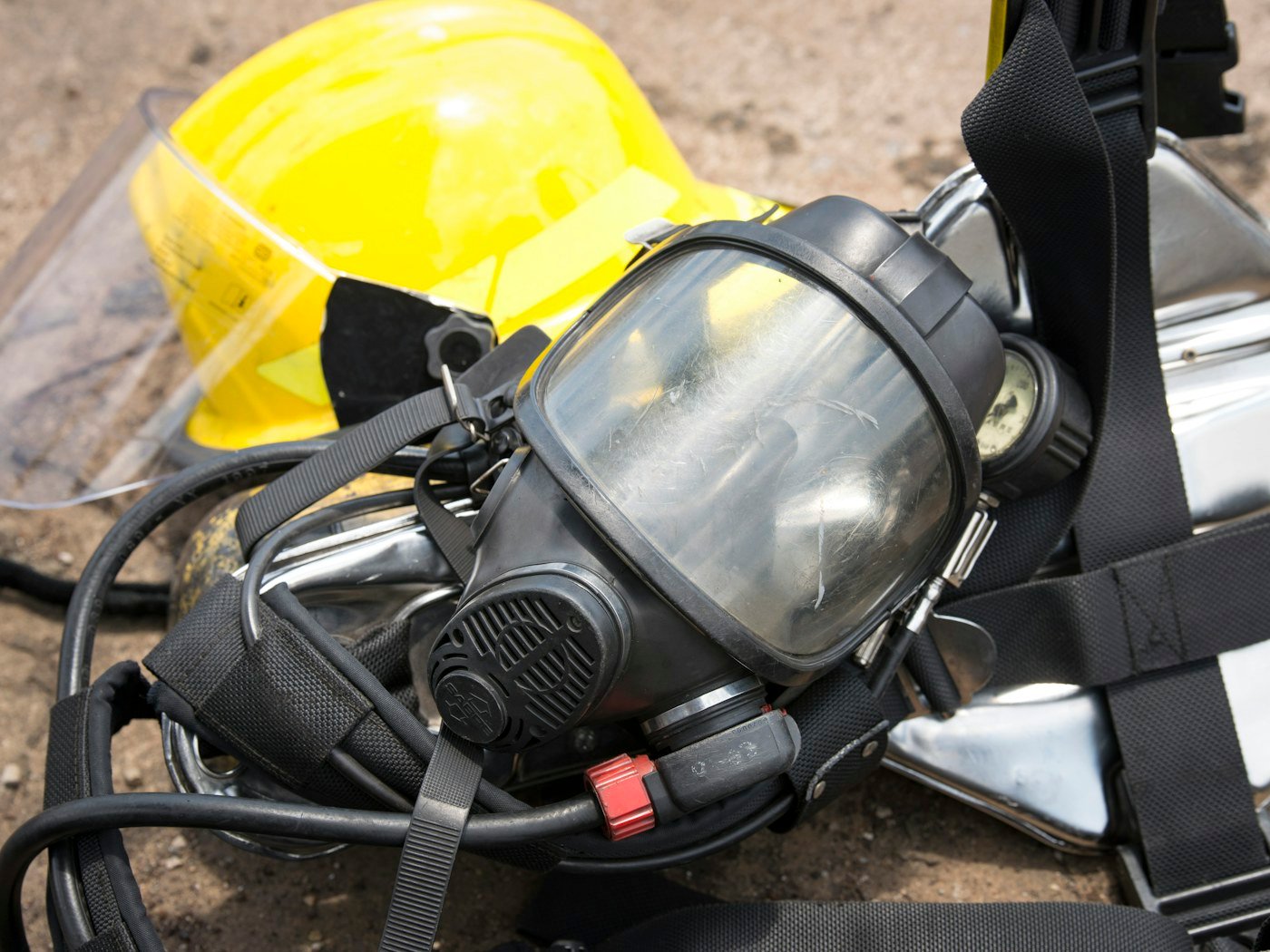
This guide to full face vs half mask is written for UAE work sites, and also applies to our service areas in Saudi Arabia and India. If you need help applying full face vs half mask on your site, our team can confirm the right option and supply certified stock from the safety products range, or you can request a quotation. For the underlying standards, see the International Organization for Standardization.
Frequently asked questions
What is the protection factor of a full face respirator?
Under UK HSE guidance a full face mask with P3 particulate filters has an assigned protection factor of 40, compared with 20 for a half mask. For gas filters the usual limits are 20 times and 10 times the exposure limit respectively.
Do full face respirators need fit testing in the UAE?
Yes. Any tight-fitting respirator should be quantitatively or qualitatively fit tested for each wearer and model, and the record kept. Abu Dhabi OSHAD, ADNOC and Saudi Aramco programmes all expect fit-test evidence during audits.
Can I use a full face respirator in a confined space?
Only if the atmosphere has been tested and contains at least 19.5 per cent oxygen with contaminants within the filter's capacity. Where oxygen is deficient or unknown, a supplied-air or self-contained breathing apparatus is required.