


This auto-darkening welding helmet shade guide gives the short answer first: most MMA and MIG work between 100 and 250 A needs shade 10 to 12, TIG below 100 A needs shade 9 to 11, and plasma cutting or gouging above 300 A needs shade 12 to 14. The right shade is the darkest one at which the welder can still clearly see the weld pool, and an auto-darkening filter (ADF) certified to EN 379 lets the welder dial that shade in rather than guess. Below we explain how shade numbers work, what the four-digit EN 379 marking means, and what to look for when buying for a hot, dusty GCC fabrication yard.
Why shade selection matters for GCC fabricators
Arc eye (photokeratitis) and long-term retinal damage are entirely preventable, yet they remain common in small workshops across Sharjah, Jubail and the Indian subcontracting base. OSHAD-SF, the Dubai Municipality Code of Construction Safety Practice and Saudi Aramco’s Construction Safety Manual all require eye and face protection appropriate to the welding process, and ADNOC HSE standards require it to be documented in the hot-work permit. A helmet with the wrong shade is also a productivity issue: too dark and the welder lifts the hood to see the joint, too light and they squint and fatigue.
Shade numbers by process and amperage
The table below is based on the guidance in EN 169 and ANSI Z49.1 and is suitable as a starting point for workshop procedures. Welders should adjust one shade either way according to their own comfort and the ambient light.
| Process | Below 60 A | 60–160 A | 160–250 A | 250–500 A |
|---|---|---|---|---|
| MMA (stick) | 8–9 | 10 | 11 | 12–13 |
| MIG/MAG steel | – | 10 | 11 | 12–13 |
| MIG aluminium | – | 10–11 | 11–12 | 12–13 |
| TIG (GTAW) | 9–10 | 10–11 | 11–12 | 12–13 |
| Plasma cutting | 8–9 | 10 | 11 | 12–13 |
| Air-carbon arc gouging | – | 10 | 11–12 | 13–14 |
Reading the EN 379 marking on the filter
Every certified ADF carries a line such as 4/9-13 XX 1/1/1/2 EN 379. The parts mean:
- 4 is the light-state shade, the tint when the arc is off. Shade 3 or 4 is typical; lower numbers give a clearer view for set-up and grinding.
- 9-13 is the variable dark-state range. A 5-13 range covers cutting, gouging and low-amp TIG as well as general welding.
- XX is the manufacturer’s mark.
- 1/1/1/2 are the four optical classes: optical quality, diffusion of light, variation in luminous transmittance, and angle dependence. Class 1 is best in each; 1/1/1/1 is the premium grade, while 1/1/1/2 is perfectly acceptable for most production work.
The outer cover lens and the helmet shell are separately certified to EN 175, and the shell should also show EN 166 markings if it is sold with a grinding visor.
Switching speed, sensors and sensitivity
Switching time from light to dark is quoted in fractions of a millisecond; anything at 0.1 ms or faster at room temperature is fine. In practice, the number of arc sensors matters more. Two sensors can be obstructed when welding in a corner or out of position; four sensors are the sensible minimum for pipe and structural work. Look for adjustable sensitivity and delay so that low-amp TIG does not flicker and the filter does not open while the pool is still bright. Grind mode, which locks the filter at light state, prevents nuisance darkening from a neighbouring arc.
Choosing for heat, dust and long shifts
Gulf workshops push helmet electronics hard. Points to check:
- Operating temperature range of the ADF, typically -5 °C to +55 °C; cheaper filters slow down or fail above 45 °C.
- Solar cell with replaceable lithium backup batteries, since solar-only units struggle in dim indoor bays.
- Shell material: nylon or polyamide resists spatter and heat better than basic polypropylene.
- Replaceable outer cover lenses, ordered in packs, because dust and spatter scratch them quickly.
- Compatibility with a hard hat adaptor for site work, and with a powered air-purifying respirator where fume exposure is high.
- Headgear with a rear ratchet and top strap, plus washable sweatbands for summer shifts.
Common mistakes
- Running at shade 9 for every job because it feels brighter, which leaves the welder under-protected at 200 A.
- Using the welding helmet as sole eye protection; safety spectacles must be worn underneath, as EN 175 assumes.
- Ignoring the light-state shade when buying for frequent tacking and grinding.
- Leaving the helmet on the bench in direct sun, which degrades the LCD filter and the solar cell.
- Not replacing the inner cover lens, so the welder cannot judge the pool and compensates by lifting the hood.
Maintenance and replacement
Wipe the filter with a soft cloth only, never solvents. Test the ADF daily by pointing it at a bright light or using the test button. Replace cover lenses as soon as scratches obscure the view, and replace the whole ADF if it fails to darken, darkens unevenly or shows dead pixels. Pair the helmet with welding gauntlets and FR clothing for a complete hot-work kit.
Use an auto-darkening welding helmet shade guide to match shade to process and amperage. Post the auto-darkening welding helmet shade guide in workshops. Review the auto-darkening welding helmet shade guide during training.
Related guides: When to Use a Face Shield at Work: 5 Tasks That Require One · Chemical Splash Goggles vs Safety Glasses: Which to Issue? · Anti-Fog Safety Glasses for UAE Heat: 6 Features That Matter
Key takeaways: Auto-Darkening Welding Helmet Shade Guide
- Shade 10 to 12 covers most MMA and MIG work; TIG and plasma may need lighter or darker settings.
- Read the EN 379 marking: light shade, dark range and four optical classes.
- Four arc sensors, grind mode and adjustable delay are worth paying for.
- Check the ADF operating temperature and battery arrangement for GCC conditions.
- Safety spectacles are always worn under the helmet.
Al Baraka Diyar supplies EN 379 auto-darkening helmets with variable 9-13 shade, four-sensor filters and replacement lenses to fabrication shops across the UAE, with service to KSA and India. See our auto-darkening welding helmets, browse the full safety products range, or contact us for workshop quantities.
Darkening Welding Helmet Shade Guide: practical summary
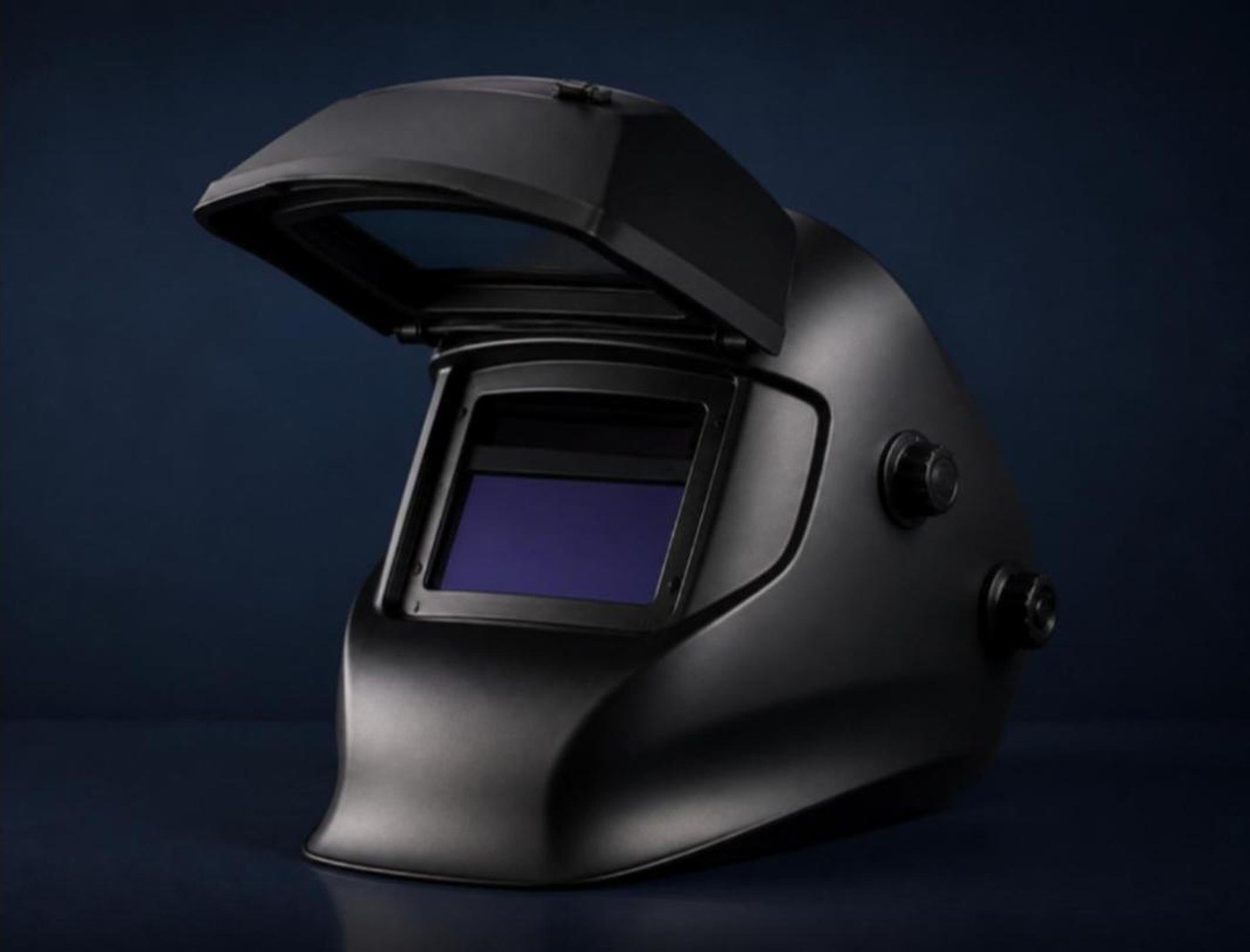
This guide to darkening welding helmet shade guide is written for UAE work sites, and also applies to our service areas in Saudi Arabia and India. If you need help applying darkening welding helmet shade guide on your site, our team can confirm the right option and supply certified stock from the safety products range, or you can request a quotation. For the underlying standards, see the International Organization for Standardization.
Frequently asked questions
What shade should I use for MIG welding at 200 A?
Shade 11 is the usual starting point for MIG/MAG on steel between 160 and 250 A. If the pool is hard to see, drop to shade 10; if there is glare or after-image, go to shade 12. Never go lighter than shade 10 at that amperage.
What does 1/1/1/2 mean on a welding filter?
These are the four EN 379 optical classes: optical quality, light diffusion, luminous transmittance variation and angle dependence. Class 1 is the best grade in each. A 1/1/1/2 filter has slight shade variation when viewed at an angle but is suitable for most work.
Do auto-darkening helmets work in high temperatures?
Quality filters are rated to about +55 °C, which covers most indoor GCC workshops. Budget units may slow or fail above 45 °C. Store helmets out of direct sunlight and check the manufacturer's operating range before buying for outdoor site work.