

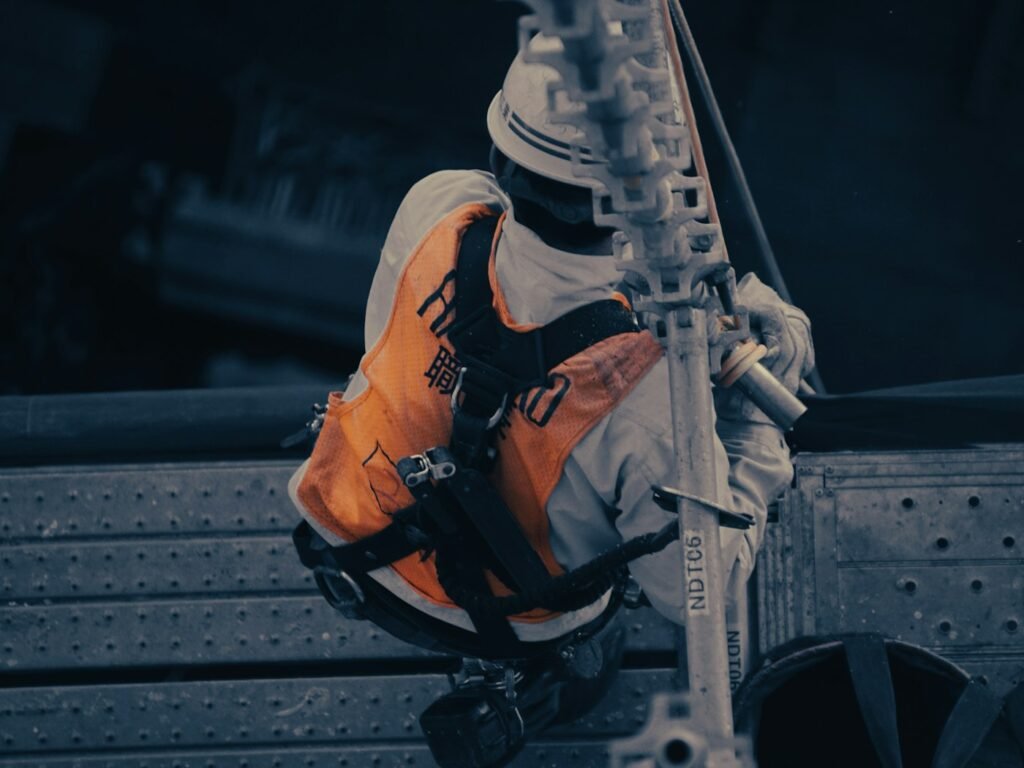
A self-retracting lifeline (SRL) arrests a fall within roughly 0.6 m and needs far less clearance than a 2 m energy-absorbing lanyard, which can require 6 m or more below the anchor. In the self retracting lifeline vs lanyard decision, the SRL wins wherever clearance is limited, the anchor is overhead and the worker moves around; the lanyard remains sensible for short, static tasks with ample fall clearance.
Why the choice matters on GCC sites
Falls from height remain the leading cause of fatal injuries on construction sites in the UAE and Saudi Arabia. Abu Dhabi OSHAD Code of Practice 23 (Working at Heights), Dubai Municipality’s construction safety rules and Saudi Aramco Construction Safety Manual (CSM) Chapter on fall protection all require 100 per cent tie-off above 1.8 m, and all require that the chosen system actually stops the worker before contact with a lower level. Many incidents in the region involve a worker who was tied off correctly but with a 2 m lanyard on a low anchor, so the arrest happened on the ground. That is a clearance problem, not a compliance problem, and the SRL is the most common fix.
Standards explained
- EN 360:2002 — retractable type fall arresters (Europe, widely accepted in the UAE).
- ANSI/ASSP Z359.14-2021 — Class 1 (overhead anchorage only) and Class 2 (foot-level and leading-edge rated) SRLs. Class 2 replaces the older “SRL-LE” category.
- EN 355:2002 — energy-absorbing lanyards, limiting arrest force to 6 kN.
- EN 795 / ANSI Z359.18 — the anchor the device hangs from; the SRL is only as good as its anchor.
Aramco CSM and ADNOC HSE standards accept either EN or ANSI certification but require the marking to be legible and the manufacturer’s inspection log to be current.
Self retracting lifeline vs lanyard: comparison
| Factor | SRL (EN 360 / Z359.14) | Energy-absorbing lanyard (EN 355) |
|---|---|---|
| Typical arrest distance | 0.6 m or less | Up to 1.75 m deployment plus lanyard length |
| Minimum clearance below anchor | Approx. 2–3 m (overhead anchor) | Approx. 6–6.5 m with 2 m lanyard |
| Worker mobility | High, cable pays out and retracts | Limited to lanyard length |
| Leading-edge use | Only Class 2 / LE-rated units | Generally not suitable |
| Weight carried | 1–7 kg depending on length | Under 1.5 kg |
| Heat and dust exposure | Sealed housing options available | Webbing degrades under UV and grit |
| Service life | Annual competent inspection, factory recertification | Replace after any fall or visible damage |
How to choose for UAE and Saudi work
Anchor position
If the anchor is overhead and the worker stays within 30 degrees of vertical, a Class 1 SRL with galvanised or stainless cable is the default. If the anchor is at foot level, for example on steel decking or precast edges, specify a Class 2 leading-edge SRL with an integral energy absorber at the harness end and an abrasion-resistant cable.
Environment
Coastal sites in Jubail, Ruwais and Jebel Ali call for stainless-steel cable or a sealed housing to resist salt corrosion. For hot-work areas, avoid webbing SRLs and choose cable. In sand-laden wind, a sealed unit with a cleanable nozzle extends service intervals.
Rescue
An SRL with an integral rescue winch allows a supervisor to raise or lower a suspended worker without a separate rescue and evacuation kit, which matters because suspension trauma can become critical within 15 minutes.
Common mistakes
- Fitting a Class 1 overhead SRL to a foot-level anchor and working over an edge.
- Connecting two SRLs in parallel “for safety”, which allows cable-to-cable contact and uncontrolled loading.
- Clipping the SRL snap hook to the full-body harness side D-ring rather than the dorsal attachment.
- Skipping the daily retraction and lock test before use.
- Ignoring the swing-fall hazard when the worker moves far from the anchor’s vertical.
Inspection, maintenance and replacement
Before each use the worker pulls the cable out sharply to confirm the brake locks, checks that retraction is smooth, and inspects the hook gate and indicator. A competent person records a formal inspection at least every 12 months, or every six months in harsh environments as many ADNOC contractors require. Any unit that has arrested a fall is withdrawn immediately and returned for factory recertification; most manufacturers set a two-year recertification cycle. Keep units out of direct sun when stored, as cab temperatures above 60°C are common in Gulf summers and will damage the mainspring lubricants over time.
Cost factors
Price depends on cable length (6 m to 30 m), cable material, leading-edge rating, sealed housing and whether a rescue winch is built in. A 6 m galvanised Class 1 unit is the economical entry point; a 15 m stainless Class 2 sealed unit with winch sits at the top of the range. Over a three-year contract the SRL usually costs less than repeatedly replacing lanyards damaged by UV and abrasion.
The self retracting lifeline vs lanyard decision depends mainly on fall clearance below the anchor. Where clearance is short, the self retracting lifeline vs lanyard comparison usually favours the retractable unit. Train users on the self retracting lifeline vs lanyard difference so they connect each one correctly.
In boom-type man lifts, workers normally wear a full-body harness with a short restraint lanyard clipped to the basket anchor point.
Related guides: How to Install a Temporary Horizontal Lifeline: 6 Steps · Restraint Lanyard vs Fall Arrest Lanyard: 5 Key Differences · How to Inspect a Safety Harness: 10-Point Site Checklist
Key takeaways: Self Retracting Lifeline vs Lanyard
- SRLs arrest falls in under 0.6 m and suit low-clearance work; lanyards need around 6 m of clearance.
- Match the device class to the anchor height: Class 2 for foot-level or leading-edge work.
- Choose stainless or sealed units for coastal and sandy GCC sites.
- Inspect before every use, formally at least annually, and withdraw after any fall.
- Never connect SRLs in parallel or to side D-rings.
Al Baraka Diyar supplies EN 360 and ANSI Z359.14 self-retracting lifelines for UAE and Saudi sites, with the full range of safety products available from stock. For help specifying length, class and cable type for your site, contact our team.
Vs Lanyard: practical summary
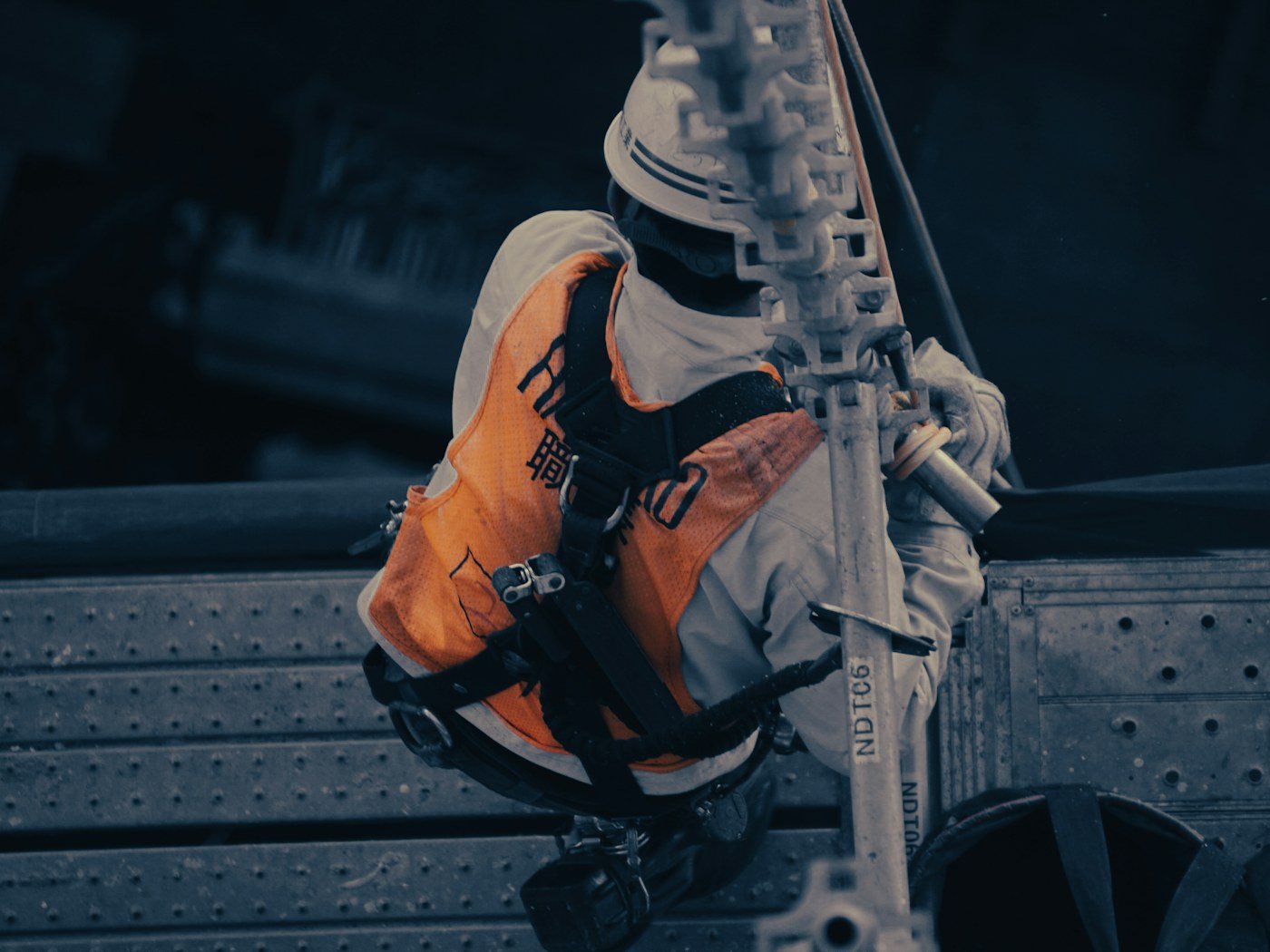
This guide to vs lanyard is written for UAE work sites, and also applies to our service areas in Saudi Arabia and India. If you need help applying vs lanyard on your site, our team can confirm the right option and supply certified stock from the safety products range, or you can request a quotation. For the underlying standards, see the International Organization for Standardization.
Frequently asked questions
How much fall clearance does a self-retracting lifeline need?
With an overhead anchor, most SRLs need roughly 2 to 3 metres of clearance below the worker's feet, including arrest distance, harness stretch and a safety margin. Always use the clearance chart supplied by the manufacturer for the specific model and anchor position.
Can I use a standard SRL at foot level?
No. A Class 1 SRL is rated for overhead anchorage only. Foot-level and leading-edge work requires a Class 2 unit under ANSI Z359.14-2021, or an EN 360 device additionally tested to the leading-edge requirements, with an energy absorber at the harness end.
How often must an SRL be inspected in the UAE?
Workers inspect the unit before every use. A competent person completes a documented inspection at least every 12 months, and many ADNOC and Aramco contractors require six-monthly checks. Follow the manufacturer's recertification interval, typically every two years.