

Respiratory protection · Premium & specialised · HSE-mandated
Powered Air-Purifying Respirators (PAPR) in UAE, KSA & India
Powered air-purifying respirators (PAPR) are battery-powered blower units that draw contaminated air through particulate or gas filters and deliver clean air to a hood, helmet, visor or mask, reducing breathing effort and heat build-up.
Site quantities · CE / ANSI certificates · Delivery across UAE, KSA & India

A PAPR consists of a belt-mounted blower with rechargeable battery, one to three filters for particulates, gases or vapours, a breathing tube and a headtop. Loose-fitting hoods, helmets and visors are certified to EN 12941 (TH1 to TH3), while tight-fitting masks are certified to EN 12942 (TM1 to TM3). TH3 and TM3 devices provide assigned protection factors of 40 and above and are used where disposable or half-mask respirators would be inadequate or too uncomfortable.
Welders, grinders, spray painters, pharmaceutical operators, asbestos removers and healthcare teams across the Gulf choose PAPR because the constant airflow cools the face and removes the need for face-fit testing with loose headtops. Al Baraka Diyar supplies PAPR systems, headtops, filters and batteries across the UAE (Ajman, Dubai, Abu Dhabi), Saudi Arabia and India for shipyards, fabrication shops, refineries and clean rooms.
Key features
- EN 12941 TH2 / TH3 loose-fitting headtops: hoods, helmets with visors and welding helmets with ADF
- EN 12942 TM3 tight-fitting full-face mask options for highest protection
- Blower airflow 160–230 L/min with automatic flow control and low-flow and low-battery alarms
- P3 (P R SL) particulate, A2P3, ABEK1P3 and specialist filters for gases and vapours
- Lithium-ion battery giving 8 to 12 hours per charge; intrinsically safe versions for ATEX zones
- Flow indicator, washable belt and decontaminable housing for pharma and asbestos use
Technical specifications
| Standards | EN 12941 (TH1/TH2/TH3); EN 12942 (TM1/TM2/TM3); EN 166 / EN 175 for visors and welding headtops; NIOSH 42 CFR 84 for US units |
|---|---|
| Protection | TH2 APF 20; TH3 APF 40; TM3 APF 40+ (UK-style factors) |
| Airflow | Minimum 160 L/min; typically 170–230 L/min |
| Filters | P R SL (P3); A2P R SL; ABE1P R SL; ABEK1P R SL; AX, K2 options |
| Battery | Li-ion, 8–12 h; charge 3–4 h; ATEX-certified versions available |
| Headtops | Loose hood, face-seal hood, hard-hat with visor, welding helmet with ADF, full-face mask |
| Weight | Blower with battery and filters approx. 1.0–1.5 kg |
| Ingress protection | IP54 to IP67 depending on model |
| Packaging | Starter kits boxed; filters in packs of 2–5; headtops individually boxed |
Variants available
- PAPR with loose-fitting hood, TH2, for painting and pharma
- PAPR with hard-hat and face shield, TH3, for grinding and construction
- Welding PAPR with auto-darkening helmet, TH3
- PAPR with full-face mask, TM3, for asbestos and chemical work
- ATEX intrinsically safe PAPR for refinery and petrochemical areas
- Spare filters, batteries, breathing tubes and chargers
Brands we supply
Applications across GCC sites
welding and grinding in Hamriyah, Jebel Ali and Dammam yards
coating and insulation removal on ADNOC and Saudi Aramco maintenance contracts
asbestos removal, silica-dust cutting and spray-applied fireproofing
API handling and powder dispensing in Dubai and Jeddah plants
infectious-disease isolation and aerosol-generating procedures
cement, steel and aluminium smelter maintenance in Abu Dhabi and Jubail
What site HSE teams expect
Dubai Municipality and Abu Dhabi OSHAD require respiratory protection selected on an assigned protection factor basis, and PAPR to EN 12941 TH3 is commonly specified for asbestos removal, silica cutting and welding fume where half masks are inadequate. ADNOC HSE and Saudi Aramco CSM accept CE or NIOSH-approved PAPR; in ATEX-classified areas the blower unit must carry intrinsic-safety certification. Loose-fitting headtops avoid the face-fit requirement, which simplifies compliance for multinational workforces.
Filters are replaced on breakthrough, at the manufacturer's maximum hours or when the airflow alarm sounds; particulate filters commonly last days to weeks, gas filters are time-limited once opened. Batteries are cycled per manufacturer guidance and flow checked before each use. Al Baraka Diyar supplies PAPR with CE declarations, EN 12941/12942 certificates and user training materials.
How to choose
- Choose TH3 headtops for welding, asbestos and silica; TH2 hoods for painting and pharma
- Select the filter class to match contaminants: P3 for dusts, A2P3 for solvents, ABEK1P3 for mixed gases
- Specify ATEX-certified blowers for Zone 1 or Zone 2 refinery and petrochemical areas
- Consider battery runtime versus shift length and whether hot-swap batteries are needed
Frequently asked questions
Does a PAPR with a hood need face-fit testing?
No. Loose-fitting hoods, helmets and visors to EN 12941 are not tight-fitting and do not require fit testing, and can be worn with beards and spectacles. Tight-fitting PAPR masks to EN 12942 do require face-fit testing like any other mask.
What is the difference between TH2 and TH3 PAPR?
TH3 devices have lower inward leakage and give an assigned protection factor of about 40, compared with 20 for TH2. TH3 is specified for asbestos, silica, welding fume and other high-hazard tasks; TH2 is adequate for many painting, pharmaceutical and nuisance-dust applications.
How long do PAPR filters and batteries last?
Particulate filters are changed when the airflow alarm sounds or at a set interval, often weekly in dusty work. Gas and vapour filters have a maximum service life once unsealed, typically up to six months, and are changed on breakthrough. Lithium batteries give 8 to 12 hours and last around 500 charge cycles.
Can a PAPR be used in oxygen-deficient or IDLH atmospheres?
No. PAPR only filters the surrounding air and must not be used where oxygen is below 19.5 % or in immediately dangerous to life or health conditions. Those tasks require supplied-air respirators or SCBA, which Al Baraka Diyar also supplies.
Is PAPR practical in Gulf summer heat?
Yes. The constant airflow across the face reduces heat stress and visor fogging compared with tight-fitting masks, which is why PAPR is popular with welders and blasters in UAE and Saudi yards. Battery performance is maintained up to about 50 °C on most models.
Quote for Powered Air-Purifying Respirators (PAPR)
Tell us quantity, sizes and delivery location. We reply with an itemised quotation and certificates within one working day.
Related safety products
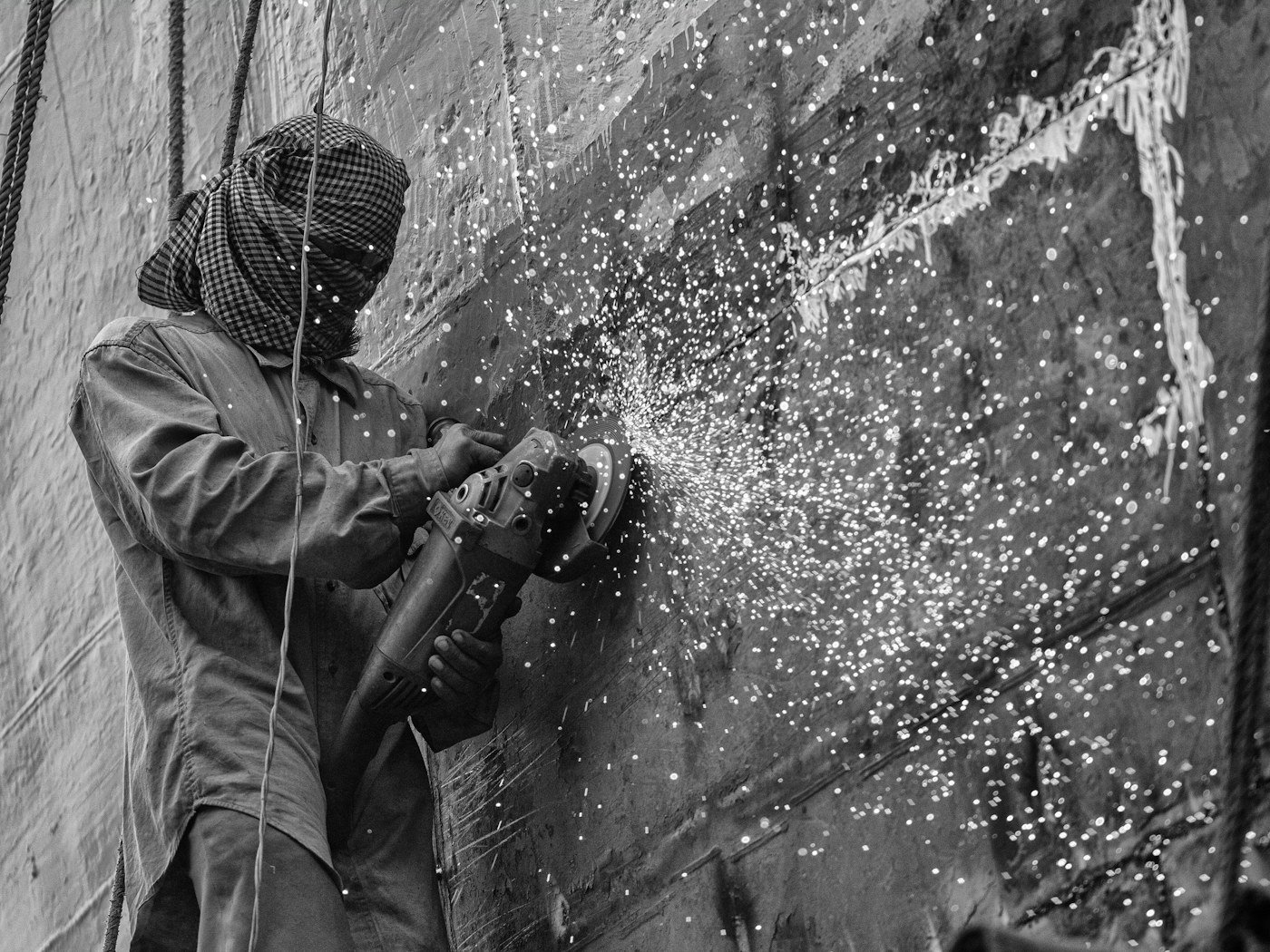
Supplied-Air (Airline) Respirators
Supplied-air respirators are airline breathing systems that deliver filtered compressed breathing air through a hose from a compressor or cy…
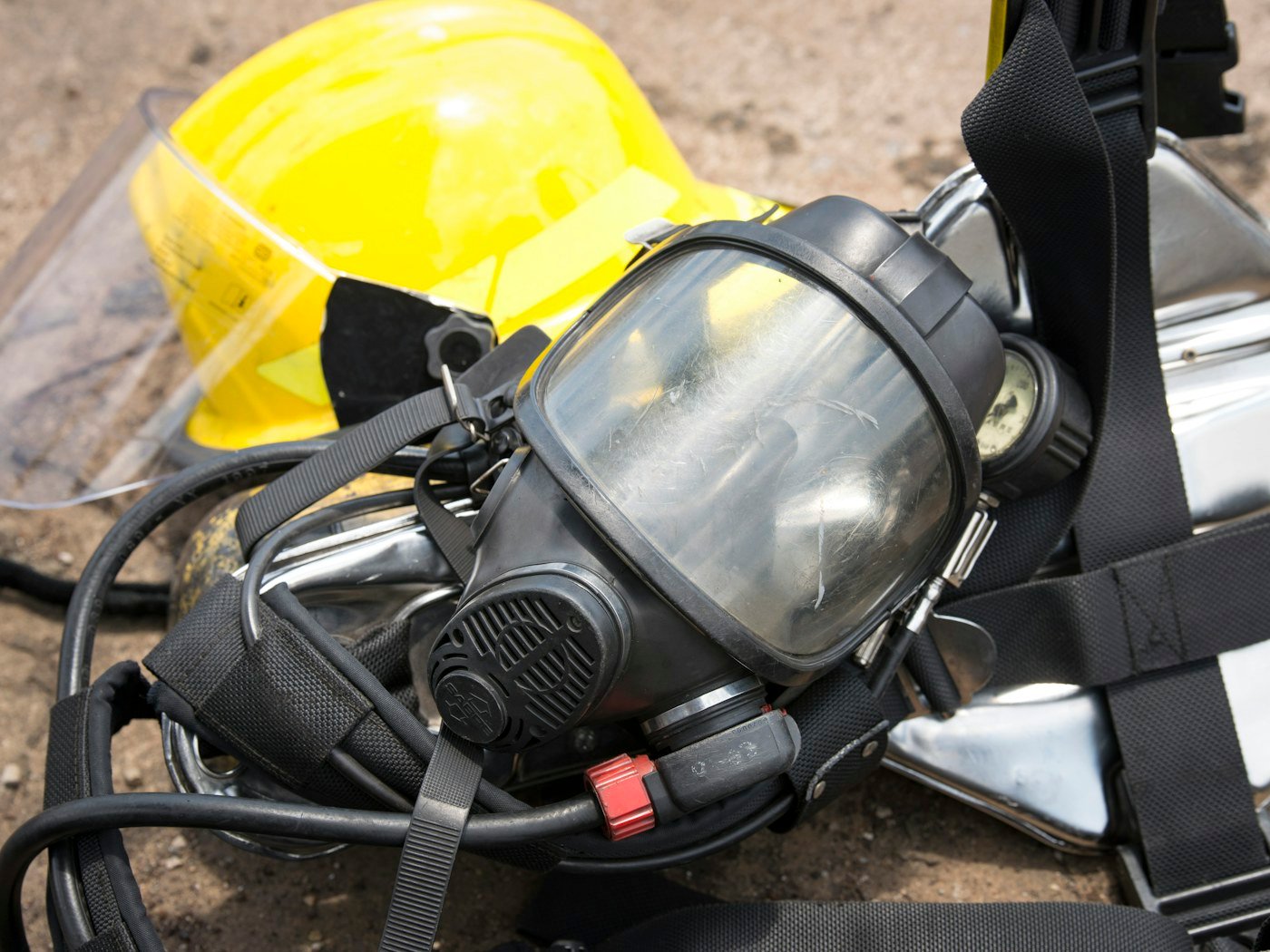
Full-Face Reusable Respirators
Full-face reusable respirators are tight-fitting masks that cover the eyes, nose and mouth and filter contaminated air through replaceable g…
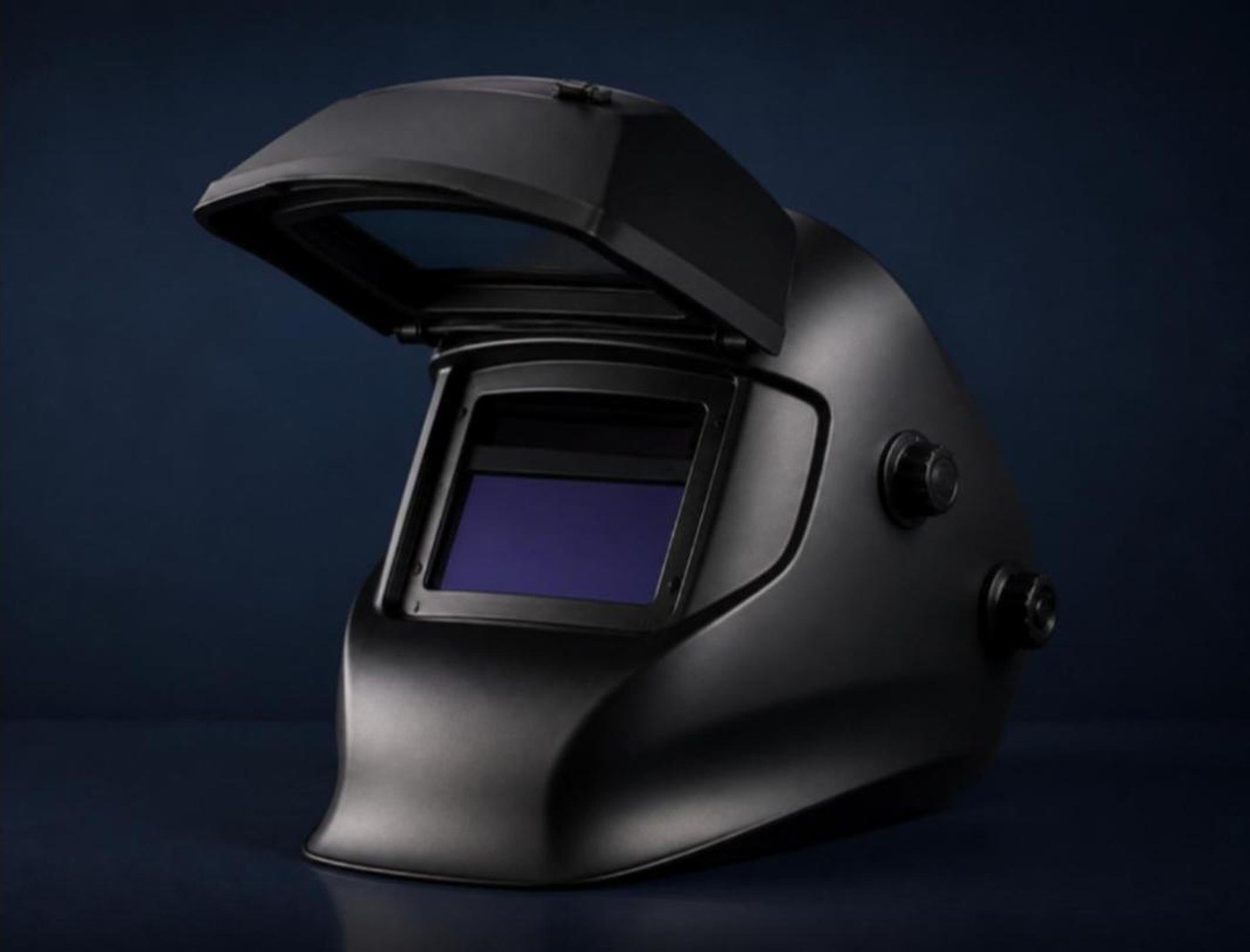
Welding Helmets
Welding helmets are head-mounted face and eye protectors with a shade 9–13 filter, certified to EN 175 for the shell and EN 379 for auto-dar…
Need Powered Air-Purifying Respirators (PAPR) for your site?
Send us the quantity, sizes and delivery location, or the client standard you must meet, and we will return an itemised quotation with certificates within one working day.