

Hand protection · Premium & specialised · HSE-mandated
Electrical Insulating Gloves in UAE, KSA & India
Electrical insulating gloves are natural-rubber or latex gloves tested to IEC 60903 or ASTM D120 that protect the wearer from electric shock when working on or near live conductors up to a stated voltage class.
Site quantities · CE / ANSI certificates · Delivery across UAE, KSA & India
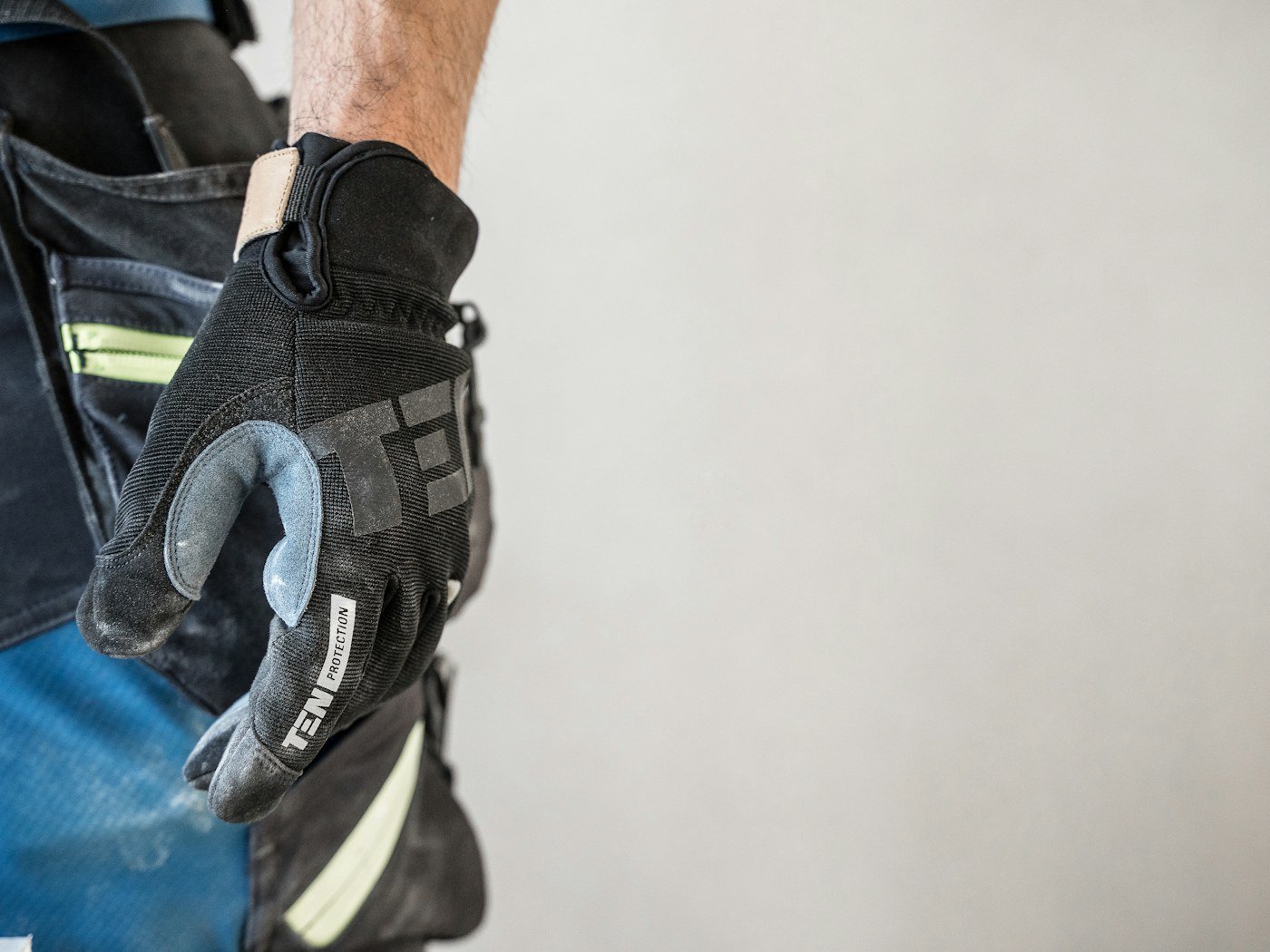
Electrical insulating gloves are dielectric rubber gloves manufactured and individually tested to IEC 60903 (EN 60903) or ASTM D120. They are classified from Class 00 (500 V AC) to Class 4 (36,000 V AC) and are worn with leather over-protectors to guard the rubber against cuts and abrasion. Each glove carries a date-stamped test mark, and the rubber must be electrically retested at defined intervals for the glove to remain in service.
Across the GCC these gloves are used by utility linemen, substation technicians, MEP contractors, panel builders, solar O&M crews and oil and gas electrical teams following DEWA, SEC, ADNOC and Saudi Aramco live-working procedures. Al Baraka Diyar supplies site quantities of insulating gloves and protectors across the UAE (Ajman, Dubai, Abu Dhabi), Saudi Arabia and India, with class-matched protectors, canvas storage bags and glove inflators available on the same order.
Key features
- Natural-rubber latex construction, individually dielectric-tested at factory to IEC 60903 / ASTM D120
- Voltage classes 00, 0, 1, 2, 3 and 4 with colour-coded, date-stamped cuff labels
- Category-marked resistance to acid, oil, ozone and very low temperature (A, H, Z, C) where specified
- Contoured hand shape and 280 mm or 360 mm lengths for dexterity on panel and overhead work
- Supplied with goatskin leather over-protectors matched to the rubber glove size and class
- Compatible with glove inflator testers and canvas glove bags for pre-use checks and storage
Technical specifications
| Standards | IEC 60903 / EN 60903; ASTM D120; ASTM F496 (in-service care) |
|---|---|
| Voltage classes | Class 00 (500 V AC), 0 (1 kV), 1 (7.5 kV), 2 (17 kV), 3 (26.5 kV), 4 (36 kV) |
| Material | Natural rubber latex, seamless dipped; leather over-protectors |
| Lengths | 280 mm, 360 mm, 410 mm (class dependent) |
| Sizes | 8, 9, 10, 11, 12 |
| Colours | Orange, red, black or bi-colour (class dependent) |
| Retest interval | Typically every 6 months in service; not more than 12 months from test date before first issue |
| Packaging | Pair in sealed bag; cartons of 10 pairs; protectors ordered per pair |
Variants available
- Class 00 500 V gloves for low-voltage panel work
- Class 0 1,000 V gloves for LV distribution and solar DC
- Class 2 17 kV gloves for 11 kV switching
- Class 4 36 kV gloves for 33 kV networks
- Leather over-protectors, 280 mm and 360 mm
- Glove inflator tester and canvas storage bag
Brands we supply
Applications across GCC sites
live-line working and switching on DEWA, SEC and SEWA distribution networks
MCC and switchgear maintenance under ADNOC and Saudi Aramco electrical safety rules
DC string isolation and inverter maintenance at utility-scale PV plants
temporary supply boards and LV panel terminations
motor control centre racking and lockout verification in plants and refineries
data centre and hospital switchroom maintenance
What site HSE teams expect
In the UAE, employers are expected to provide voltage-rated hand protection for any work on or near live conductors under the Federal OSH framework, Abu Dhabi OSHAD standards and Dubai Municipality safety codes. DEWA and ADNOC electrical safety rules typically require IEC 60903 or ASTM D120 gloves with leather protectors and a documented inspection regime. Saudi Aramco CSM and SEC practice follow the same standards with class selection based on the maximum system voltage.
Insulating gloves must be visually inspected and air-tested before every use and electrically retested at a laboratory typically every six months. Gloves carry a factory test date, and new stock should normally be retested if the first issue is more than 12 months after that date. Al Baraka Diyar supplies gloves with manufacturer test certificates and declaration of conformity; buyers typically retain these in their PPE register for HSE audits.
How to choose
- Match the glove class to the maximum voltage of the system, allowing for the rated use voltage not the nominal voltage
- Always order leather over-protectors sized to the rubber glove; mechanical damage voids the dielectric rating
- Choose category A, H, Z or C marking if gloves will contact acids, oil, ozone or cold
- Select 360 mm lengths for overhead or arm-reach work; 280 mm for panels where dexterity matters
Frequently asked questions
Which class of electrical insulating glove do I need for 11 kV work in the UAE?
For 11 kV switching, Class 2 gloves rated 17,000 V AC maximum use voltage are typically specified. Class 1 (7,500 V) is insufficient. Utility and ADNOC procedures usually also require leather over-protectors and a pre-use air test before any live or near-live task.
How often must insulating gloves be retested?
In-service gloves are commonly retested electrically every six months, and never more than 12 months after the last test. Unissued gloves are generally acceptable up to 12 months from the factory test date. Any glove that fails a visual or air inflation check must be withdrawn immediately.
Are IEC 60903 and ASTM D120 gloves interchangeable?
Both standards define the same voltage classes and similar test voltages, so either is normally accepted on UAE and Saudi sites. Check the client specification: DEWA and Saudi Aramco documents sometimes name one standard, and the glove marking must match what the method statement calls for.
Do I need leather protectors over the rubber gloves?
Yes, in nearly all cases. Leather over-protectors guard the rubber against cuts, punctures and abrasion that would compromise insulation. Many procedures allow omitting protectors only for Class 00 and 0 gloves in low-risk tasks where dexterity is critical, and only with a documented risk assessment.
What affects the price and delivery of insulating gloves in bulk?
Price depends mainly on voltage class, length, category marking and whether protectors are included. Class 00 and 0 gloves are the most economical. Al Baraka Diyar holds common classes for fast delivery to Dubai, Abu Dhabi and Ajman, with Saudi and Indian shipments arranged against site schedules.
Quote for Electrical Insulating Gloves
Tell us quantity, sizes and delivery location. We reply with an itemised quotation and certificates within one working day.
Related safety products

Dielectric Boots & Insulated Tools
Dielectric boots are electrically insulating safety footwear tested to EN 50321 or ASTM F2413 EH, and insulated tools are hand tools rated t…
Arc-Flash Protection Kits
An arc-flash kit is a matched set of arc-rated clothing, hood or face shield, insulated gloves and accessories that protects electrical work…

Lockout-Tagout (LOTO) Kits
Lockout-tagout kits are sets of safety padlocks, hasps, circuit breaker, valve and plug lockouts and warning tags used to isolate energy sou…
Need Electrical Insulating Gloves for your site?
Send us the quantity, sizes and delivery location, or the client standard you must meet, and we will return an itemised quotation with certificates within one working day.