

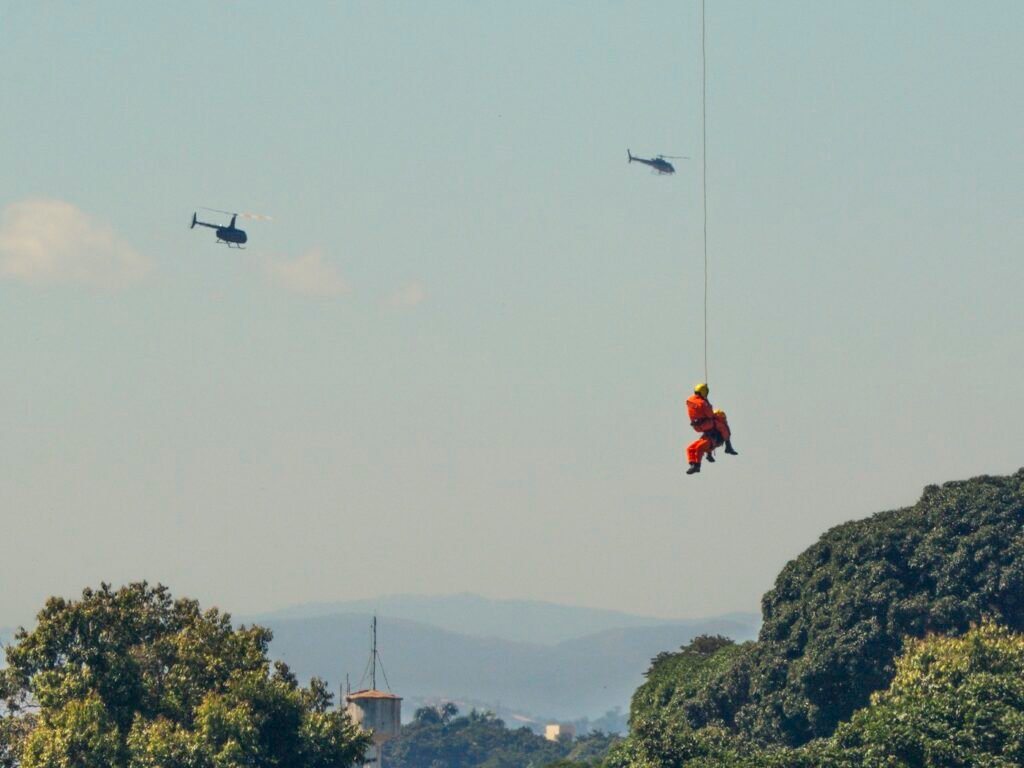
Work at height rescue plan requirements in the UAE and Saudi Arabia come down to five things: a written plan for every task where a fall arrest could occur, rescue equipment on site before the work starts, trained rescuers on the same shift, a target of reaching a suspended worker within minutes rather than waiting for the fire service, and a drill record. A harness stops the fall; the rescue plan stops the fall from becoming a fatality.
Why rescue matters on GCC sites
A worker hanging motionless in a full-body harness can lose consciousness from suspension trauma (orthostatic intolerance) in as little as 10 to 20 minutes, faster in Gulf heat where dehydration is already likely. Civil Defence response to a remote site in the Western Region or the Eastern Province can take far longer. For that reason OSHAD CoP 23, Dubai Municipality’s construction safety code, ADNOC HSE standards and Saudi Aramco CSM all require the contractor to be able to rescue its own people promptly, and permit-to-work systems routinely ask for the rescue plan reference before a height permit is issued.
What the plan must contain
- Task, location and the fall hazards identified in the risk assessment.
- Rescue method chosen for that location: lower, raise, lateral or self-rescue.
- Equipment list, storage point and the person responsible for its pre-use check.
- Named rescuers on shift, their training certificates and refresher dates.
- Communication method and the sequence for alerting the site medic and Civil Defence.
- Post-rescue casualty handling, including keeping the casualty seated upright and avoiding laying them flat immediately.
- Drill frequency and the last drill record.
Standards explained
- EN 341:2011 — descender devices for rescue, classed A to D by descent energy.
- EN 1496:2017 — rescue lifting devices, Class A (raise only) and Class B (raise and lower).
- EN 1497:2007 — rescue harnesses; EN 1498 — rescue loops.
- ANSI/ASSP Z359.4 — assisted-rescue and self-rescue systems.
- EN 12841 — rope adjustment devices used in rope-access rescue.
Choosing a rescue kit
| Kit type | Standard | Best for | Limitations |
|---|---|---|---|
| Pole-and-descender lowering kit | EN 341 Class A | Scaffold, steelwork, telecom masts; casualty lowered to ground | Needs clear ground below; rescuer must reach anchor above casualty |
| Raising and lowering winch kit | EN 1496 Class B | Confined-space and tank entries combined with fall arrest | Heavier; needs a tripod or davit |
| Self-rescue descender (personal) | EN 341 / Z359.4 | Lone workers on towers and wind turbines | Requires a conscious, trained user |
| Controlled-descent evacuation kit | EN 341 Class A/B, up to 100 m+ | Cranes, chimneys, high-rise façade work | Rope length must match the structure |
| SRL with rescue winch | EN 360 + EN 1496 | Single-point overhead work | Rescue only along the SRL line |
Common mistakes
- Writing “call Civil Defence” as the rescue method.
- Keeping the kit in the site office 500 m from the work.
- Training one rescuer who then works a different shift.
- Choosing a 20 m kit for a 35 m structure.
- Not supplying trauma relief straps so the casualty can relieve leg pressure while waiting.
- Forgetting that a confined-space entry also needs a vertical rescue capability.
Training and drills
Rescuers need practical training on the exact kit on site, not a generic certificate. Aramco CSM and most ADNOC contractors expect a drill at least every six months, and many main contractors run one per site phase. Record the time taken from alarm to casualty on the ground; anything beyond 15 minutes should trigger a review of kit location or method.
Inspection, maintenance and replacement
Rescue kits are often stored for months without use, so a pre-use check before each height permit and a competent-person inspection every 12 months are the minimum. Keep ropes sealed from sand and UV in the supplied bag. Descenders used for a live rescue are returned to the manufacturer for inspection; rope that has run through a hot descender is retired. Replace any kit that has been exposed to chemicals or that shows a stiff, chalky or glazed rope sheath.
Cost factors
A basic 20 m pole-and-descender kit is the entry point. Longer ropes, EN 1496 Class B winches, tripods and sealed cases add to the price, but the kit is reusable across sites for years with proper storage and inspection. Weigh this against the cost of a permit refusal or a fatality investigation.
A work at height rescue plan must be written before anyone is clipped on, not after a fall happens. Test the work at height rescue plan with a drill, timed against suspension-trauma limits. Keep rescue kits beside the job and review the work at height rescue plan whenever the access method changes.
Where workers are lifted in a basket or platform, the rescue plan should cover the man lift as well, including ground-level lowering controls and a trained operator on the ground.
Related guides: How to Install a Temporary Horizontal Lifeline: 6 Steps · Self Retracting Lifeline vs Lanyard: 7 Facts for UAE Sites · Restraint Lanyard vs Fall Arrest Lanyard: 5 Key Differences
Key takeaways: Work at Height Rescue Plan
- Every height task that relies on fall arrest needs a written, task-specific rescue plan.
- Aim to reach the casualty within minutes; suspension trauma does not wait.
- Match the kit type and rope length to the structure and the anchor options.
- Train rescuers on the actual kit and drill at least twice a year.
- Store, inspect and retire rescue equipment like any other fall-protection PPE.
Al Baraka Diyar supplies EN 341 and EN 1496 certified work-at-height rescue and evacuation kits as part of its safety products catalogue for the UAE, Saudi Arabia and India. To match a kit to your structure and permit requirements, get in touch.
Work At Height Rescue Plan: practical summary
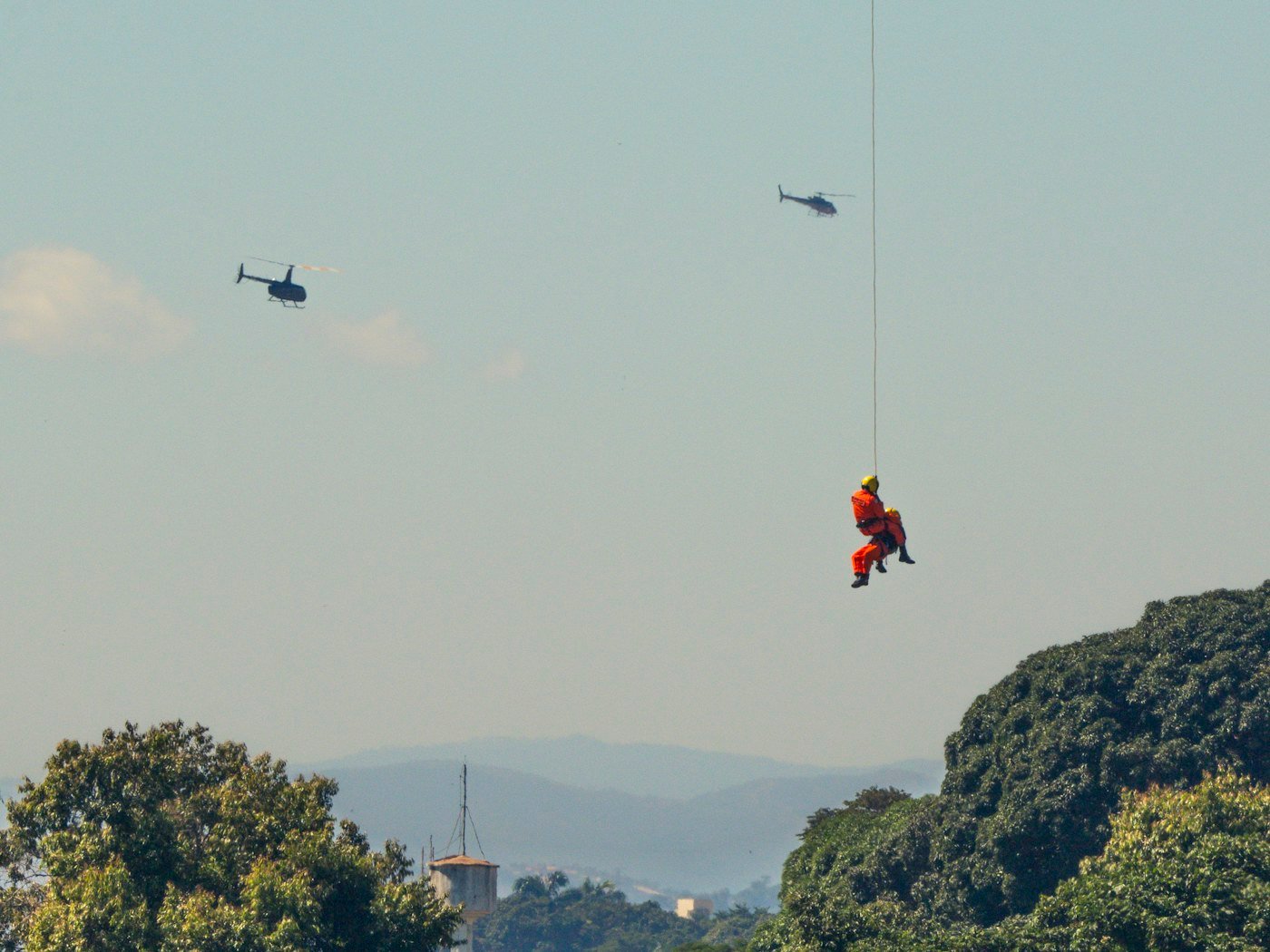
This guide to work at height rescue plan is written for UAE work sites, and also applies to our service areas in Saudi Arabia and India. If you need help applying work at height rescue plan on your site, our team can confirm the right option and supply certified stock from the safety products range, or you can request a quotation. For the underlying standards, see the International Organization for Standardization.
Frequently asked questions
How quickly must a suspended worker be rescued?
There is no fixed legal time, but suspension trauma can cause loss of consciousness within 10 to 20 minutes and faster in heat. Most GCC permit systems and the OSHAD and Aramco guidance expect the contractor to reach and lower the casualty within minutes using on-site equipment and trained staff.
Is calling Civil Defence an acceptable rescue plan?
No. Civil Defence should be alerted, but the plan must show how the contractor's own trained rescuers will reach the casualty promptly with equipment kept at the work location. Relying solely on external services is routinely rejected during permit-to-work review.
What is the difference between EN 341 and EN 1496 rescue devices?
EN 341 covers descender devices that lower a person to safety at a controlled speed. EN 1496 covers rescue lifting devices that raise a casualty, with Class B units able to both raise and lower. Many site kits combine both functions.