

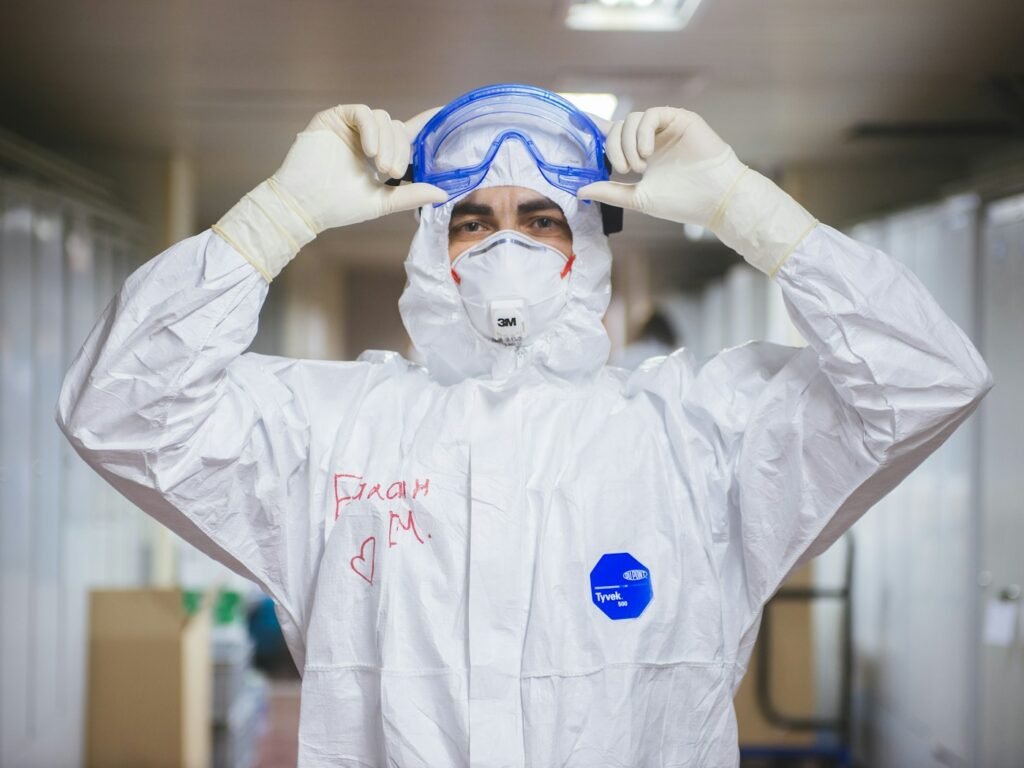
The difference between type 5 vs type 6 disposable coveralls is the hazard each is tested against: Type 5 (EN ISO 13982-1) protects against airborne solid particulates such as dust, fibres and powders, while Type 6 (EN 13034) protects against limited splashes and light spray of liquid chemicals. Most disposable coveralls sold for industrial use are certified to both, labelled Type 5/6, and that dual rating covers the majority of painting, blasting, insulation and cleaning tasks on Gulf sites.
This guide explains what the ratings mean, how Type 5/6 differs from Type 3 and 4 suits, which fabrics to choose for hot climates, and the common selection errors to avoid.
Why disposable coveralls matter on GCC sites
Oil and gas shutdowns, fit-out works and industrial cleaning in the UAE and Saudi Arabia generate fine particulates and chemical mists that contaminate reusable workwear and can be carried home on clothing. Disposable coveralls provide a barrier for a single shift or task, after which they are bagged and disposed of. ADNOC HSE standards and the Saudi Aramco Construction Safety Manual both require task-specific body protection for hazardous substances, and Dubai Municipality applies strict controls on asbestos removal, where Type 5 suits are mandatory.
The EN type system explained
European chemical protective clothing is graded into six Types, from gas-tight down to limited splash. Each Type is a whole-suit test, not just a fabric test, so seams, zips and hoods are included.
| Type | Standard | Protection | Typical application |
|---|---|---|---|
| Type 3 | EN 14605 | Liquid-tight, pressurised jets | Chemical transfer, tank entry with liquid hazards |
| Type 4 | EN 14605 | Spray-tight, saturated spray | Spray cleaning, pesticide application |
| Type 5 | EN ISO 13982-1 | Airborne solid particulates | Asbestos, insulation, grinding dust, blasting, pharma |
| Type 6 | EN 13034 | Limited splash and light spray | Painting, low-hazard liquid handling, general cleaning |
Additional markings often appear on the same label: EN 1149-5 for antistatic properties (essential near flammable atmospheres and in paint booths), EN 14126 for biological agents, EN 1073-2 for radioactive particulates (common in nuclear and NDT work), and EN ISO 13688 for general requirements. All disposable coveralls should carry the CE mark and the notified body number for Category III PPE.
Type 5 vs Type 6: which do you need?
Choose by the dominant hazard:
- Dry particulates only (sanding, insulation, cement dust, asbestos, blasting): Type 5 is the critical rating. Look for a suit with taped or bound seams and a low inward leakage result in the test report.
- Light liquid splash only (brush painting, spraying water-based coatings, washing down): Type 6 is enough; a cheaper SMS suit will do.
- Both, or uncertain: a Type 5/6 microporous film suit covers both and is the safest default for mixed tasks.
- Pressurised liquid or heavy spray: neither Type 5 nor 6 is adequate. Move up to a Type 4 or Type 3 suit with sealed seams.
Fabric choice for hot climates
Two fabrics dominate the Type 5/6 market. SMS (spunbond-meltblown-spunbond) polypropylene is breathable, light and the most comfortable in Gulf heat, but offers lower liquid holdout and is typically Type 5/6 only at the budget end. Microporous film laminate (a polyethylene film bonded to a polypropylene backing) has better particle and liquid barrier performance and a smoother surface that sheds dust, but is warmer to wear. For summer outdoor work, a breathable-back design that combines microporous front panels with an SMS back panel is a good compromise, and heat-stress controls such as the UAE midday break and rotation remain necessary.
Fit, donning and disposal
A disposable suit only protects if it stays sealed. Choose a size that allows bending and reaching without stressing the seams; elasticated hood, wrists and ankles should fit over respirator straps and inside gloves and boots. Use a two-way zip with a storm flap, and tape the glove and boot interfaces where particulates are hazardous. Remove the suit by rolling it outward from the shoulders so the contaminated surface is folded inside, then bag it. Asbestos-contaminated suits must be disposed of as hazardous waste in line with Dubai Municipality and Saudi Royal Commission requirements.
Common mistakes
Buying unrated “painter’s suits” with no CE Type marking is the most common error, followed by using Type 5/6 suits for tasks that need Type 4 spray protection. Other mistakes include reusing a disposable suit across shifts, not specifying EN 1149-5 antistatic suits for paint booths or near hydrocarbons, and ordering a single size for a whole crew. Finally, a disposable coverall does not provide flame resistance; wear it over FR clothing where that is required and never as a substitute.
Base the type 5 vs type 6 decision on the hazard: dust or light liquid splash. Some coveralls carry both, which simplifies type 5 vs type 6 stock. Check seams and sizing whichever way the type 5 vs type 6 choice goes.
Related guides: Type 3 vs Type 4 Chemical Suit: Which One Does Your Job Need? · Best Cotton Coveralls for UAE Heat: 7 Factors to Check · High Visibility Vest Classes Explained: EN ISO 20471 Guide
Key takeaways: Type 5 vs Type 6
- Type 5 = dry particulates (EN ISO 13982-1); Type 6 = light liquid splash (EN 13034).
- A Type 5/6 dual-rated suit covers most painting, insulation and cleaning tasks.
- Heavy spray or jets need Type 4 or Type 3, not Type 5/6.
- Specify EN 1149-5 antistatic near flammable atmospheres; EN 14126 for biological hazards.
- SMS is cooler; microporous film is a better barrier. Use breathable-back designs in summer.
Al Baraka Diyar supplies Type 5/6 disposable coveralls in SMS and microporous fabrics, together with disposable respirators and the rest of our safety products range, to contractors in the UAE, KSA and India. For bulk pricing or technical data sheets, contact our team.
Type 5 Vs Type 6: practical summary

This guide to type 5 vs type 6 is written for UAE work sites, and also applies to our service areas in Saudi Arabia and India. If you need help applying type 5 vs type 6 on your site, our team can confirm the right option and supply certified stock from the safety products range, or you can request a quotation. For the underlying standards, see the International Organization for Standardization.
Frequently asked questions
Can a Type 5/6 coverall be used for spraying chemicals?
Only for light, low-pressure mist of low-hazard liquids. Type 6 is tested against a limited spray and brief splashes. For saturated spray or any pressurised application, including most solvent-based coatings, a Type 4 spray-tight suit or Type 3 liquid-tight suit with sealed seams is required.
What does EN 1149-5 mean on a disposable coverall?
EN 1149-5 means the fabric has been treated to dissipate static charge and the garment is designed to avoid incendiary discharges. It is required in paint booths, near flammable solvents and in hydrocarbon process areas, and it must be worn earthed through antistatic footwear to be effective.
Are disposable coveralls suitable for asbestos removal in the UAE?
Yes, provided they are Type 5 certified to EN ISO 13982-1 with taped seams and a hood, worn with a suitable respirator and disposed of as hazardous waste. Dubai Municipality and other UAE authorities require licensed asbestos contractors to use Type 5 suits and documented decontamination procedures.