

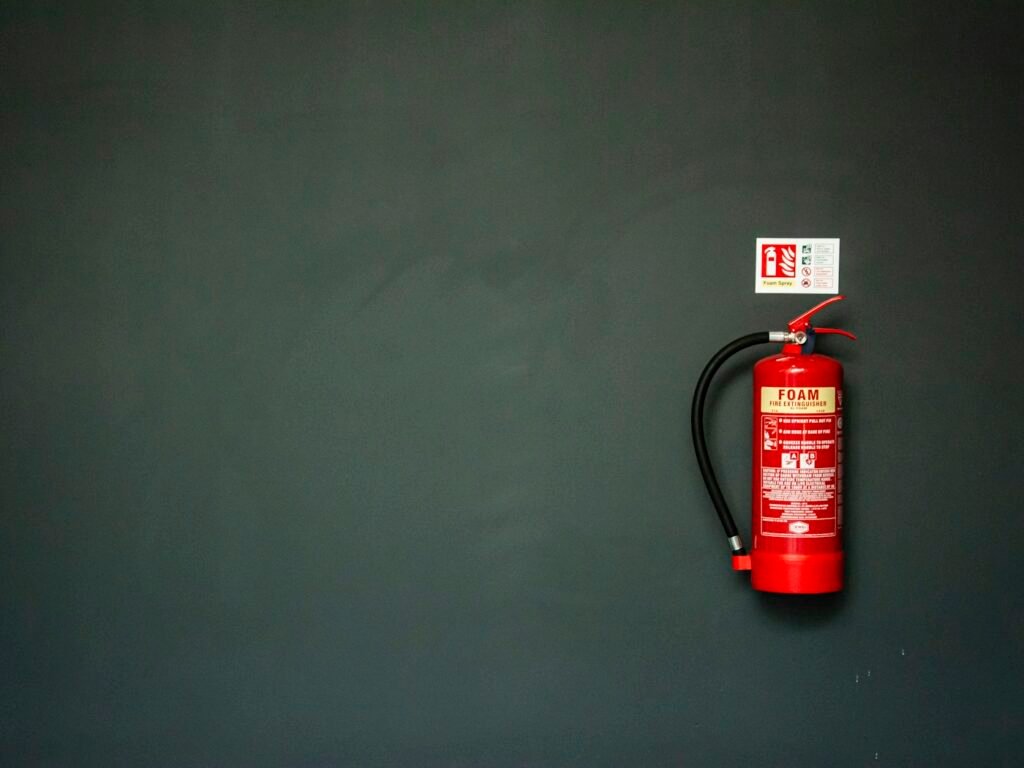
Choosing which fire extinguisher for which fire class comes down to the fuel involved: water for Class A solids such as wood and paper, foam for Class A and Class B flammable liquids, ABC dry powder for solids, liquids and gases, CO2 for electrical equipment and liquids, and wet chemical for Class F cooking oils. Dry powder is the common general-purpose choice on construction sites, while offices, plant rooms and kitchens need specific types.
This guide explains the fire classes used in the UAE and Saudi Arabia, the extinguishers that match each one, where the UAE Fire and Life Safety Code of Practice and NFPA 10 expect them to be placed, and how often they must be serviced.
Why the right extinguisher matters on GCC sites
Construction sites, warehouses and industrial facilities in the Gulf combine timber formwork, fuel storage, hot work, temporary electrics and, increasingly, lithium-ion battery tools. Using the wrong extinguisher can spread a fire (water on burning diesel), electrocute the user (water on live equipment) or do nothing at all (CO2 on a deep-seated wood fire). The UAE Civil Defence Fire and Life Safety Code of Practice requires portable extinguishers in all buildings and construction sites, selected and placed in line with NFPA 10, and Dubai Civil Defence and Abu Dhabi Civil Defence both inspect them during permit and occupancy checks. Saudi Aramco’s Construction Safety Manual requires extinguishers at every hot-work location and fuel store.
Fire classes: EN 2 vs NFPA 10
Two classification systems appear on labels in the Gulf, and they overlap but are not identical.
| Fuel type | European class (EN 2) | US class (NFPA 10) | Suitable extinguishers |
|---|---|---|---|
| Solids: wood, paper, textiles, plastics | A | A | Water, water mist, foam, ABC powder |
| Flammable liquids: petrol, diesel, solvents, paint | B | B | Foam, ABC or BC powder, CO2 |
| Flammable gases: LPG, acetylene, methane | C | B (gases included) | Dry powder; isolate the supply first |
| Metals: magnesium, aluminium swarf, lithium | D | D | Class D specialist powder only |
| Live electrical equipment | No class; electrical pictogram | C | CO2, dry powder, dielectrically tested water mist |
| Cooking oils and fats | F | K | Wet chemical |
In the EN system, Class C means gases and electrical fires are indicated by a separate symbol; in the NFPA system Class C means energised electrical equipment. Check which system the label follows before relying on the letter.
Extinguisher types compared
- Water (red label): Class A only. Cheap and effective on timber and waste but dangerous on liquids and live electrics.
- Foam / AFFF (cream label): Class A and B. Forms a film over liquid fires. Fluorine-free foams are replacing AFFF under environmental rules.
- ABC dry powder (blue label): Class A, B, C and safe on electrical equipment. The default on construction sites and in vehicles. Leaves a corrosive residue and reduces visibility indoors.
- CO2 (black label): Class B and electrical. Clean, no residue, ideal for switchrooms and server rooms, but limited on Class A and useless outdoors in wind.
- Wet chemical (yellow label): Class F/K and A. Required in commercial kitchens and canteens.
- Water mist: Class A, F and, when dielectrically tested to 35 kV, electrical. Increasingly specified for mixed-risk offices.
- Fire blankets (EN 1869): for small pan fires and clothing fires; mandatory in kitchens and welfare cabins, and useful at hot-work locations.
Ratings, sizes and placement
EN 3-7 extinguishers carry a fire rating such as 13A or 55B that states the size of test fire they put out; higher numbers mean greater capacity. Under NFPA 10, the maximum travel distance to a Class A extinguisher is 75 ft (about 23 m) and to a Class B extinguisher 30 or 50 ft (about 9 or 15 m) depending on rating.
UAE Civil Defence follows these distances, and typical site practice is a 6 kg ABC powder extinguisher at every hot-work point, fuel store, generator and welfare cabin, with CO2 in electrical rooms and wet chemical in kitchens. Mount extinguishers on wall brackets or stands with the handle no higher than about 1.1 m, signed with the ISO 7010 red fire equipment pictogram, in a shaded position; a cylinder left in Gulf sun can exceed its rated temperature.
Maintenance and servicing
Carry out a monthly visual check: pressure gauge in the green, safety pin and tamper seal intact, no corrosion, nozzle clear, and the inspection tag initialled. Annual servicing by a Civil Defence-approved company is required in the UAE, with the service sticker displayed. BS 5306-3 and NFPA 10 both add an extended service with discharge and refill, typically at five years for water, foam and powder and ten years for CO2, when the cylinder is also hydrostatically tested.
Common mistakes
Frequent findings include extinguishers stored on the ground behind materials, expired service tags, powder extinguishers with caked contents from vibration in site vehicles, CO2 extinguishers in open laydown yards, no fire blanket in kitchen cabins, and no Class D agent where aluminium or magnesium swarf is produced. Lithium-ion battery fires are a growing issue; standard ABC powder and CO2 do not reliably extinguish them, and specialist agents or large volumes of water are needed.
Match each fire extinguisher to the fire class present in the area. Inspect every fire extinguisher monthly and service it annually. Train staff to use the right fire extinguisher before an emergency.
Related guides: Fire Watch PPE Requirements for Hot Work: 8-Point Checklist · NFPA 1971 vs EN 469 Turnout Gear: 7 Differences That Matter · NFPA 2112 vs EN ISO 11612: Choosing FR Coveralls in the GCC
Key takeaways: Fire Extinguisher
- Match the extinguisher to the fuel: water for solids, foam for liquids, powder for mixed and gas risks, CO2 for electrical, wet chemical for cooking oil.
- Read whether the label uses the EN or NFPA class letters.
- Follow NFPA 10 travel distances as adopted by UAE Civil Defence and sign every extinguisher.
- Monthly visual check, annual approved service, extended service at five or ten years.
- Keep extinguishers and fire blankets at every hot-work point, fuel store and kitchen.
Al Baraka Diyar supplies fire extinguishers and fire blankets for sites and facilities, together with hot-work PPE and the full safety products range, across the UAE, with service to Saudi Arabia and India. To plan extinguisher coverage for a site or a bulk order, contact our team.
Fire Extinguisher: practical summary
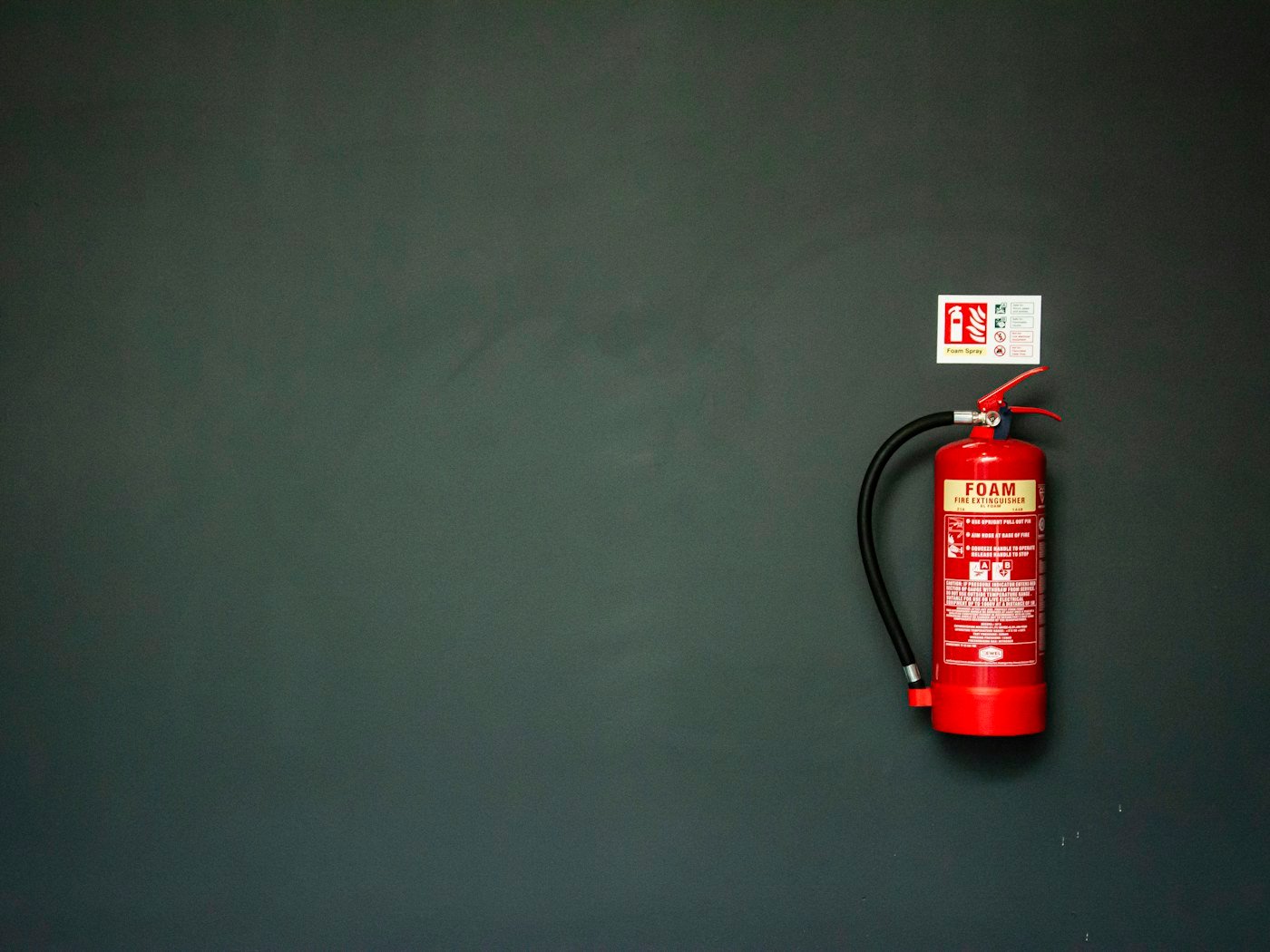
This guide to fire extinguisher is written for UAE work sites, and also applies to our service areas in Saudi Arabia and India. If you need help applying fire extinguisher on your site, our team can confirm the right option and supply certified stock from the safety products range, or you can request a quotation. For the underlying standards, see the International Organization for Standardization.
Frequently asked questions
Which fire extinguisher is best for a construction site?
A 6 kg ABC dry powder extinguisher is the standard choice on construction sites because it handles wood and waste (Class A), fuel and paint (Class B), gas (Class C) and is safe on temporary electrics. Add CO2 in electrical rooms, wet chemical and fire blankets in kitchens, and a Class D agent where metal swarf is produced.
Can a CO2 extinguisher be used on a wood or paper fire?
CO2 is not rated for Class A fires. It may knock down flames briefly but does not cool the fuel, so deep-seated fires in wood, paper or textiles usually reignite. Use water, foam or ABC powder for Class A fires and reserve CO2 for electrical equipment and small liquid fires.
How often must fire extinguishers be serviced in the UAE?
UAE Civil Defence requires an annual service by an approved maintenance company, with a dated service label on each unit, plus monthly visual checks by site staff. Water, foam and powder extinguishers need an extended service with discharge and refill at five years, and CO2 units at ten years with hydrostatic testing.