

Fall protection & rescue · Premium & specialised · HSE-mandated
Self-Retracting Lifelines (SRL) in UAE, KSA & India
Self-retracting lifelines are fall-arrest devices that pay out and retract a webbing or cable line automatically, locking within centimetres when a worker falls, and are certified to EN 360 or ANSI Z359.14.
Site quantities · CE / ANSI certificates · Delivery across UAE, KSA & India
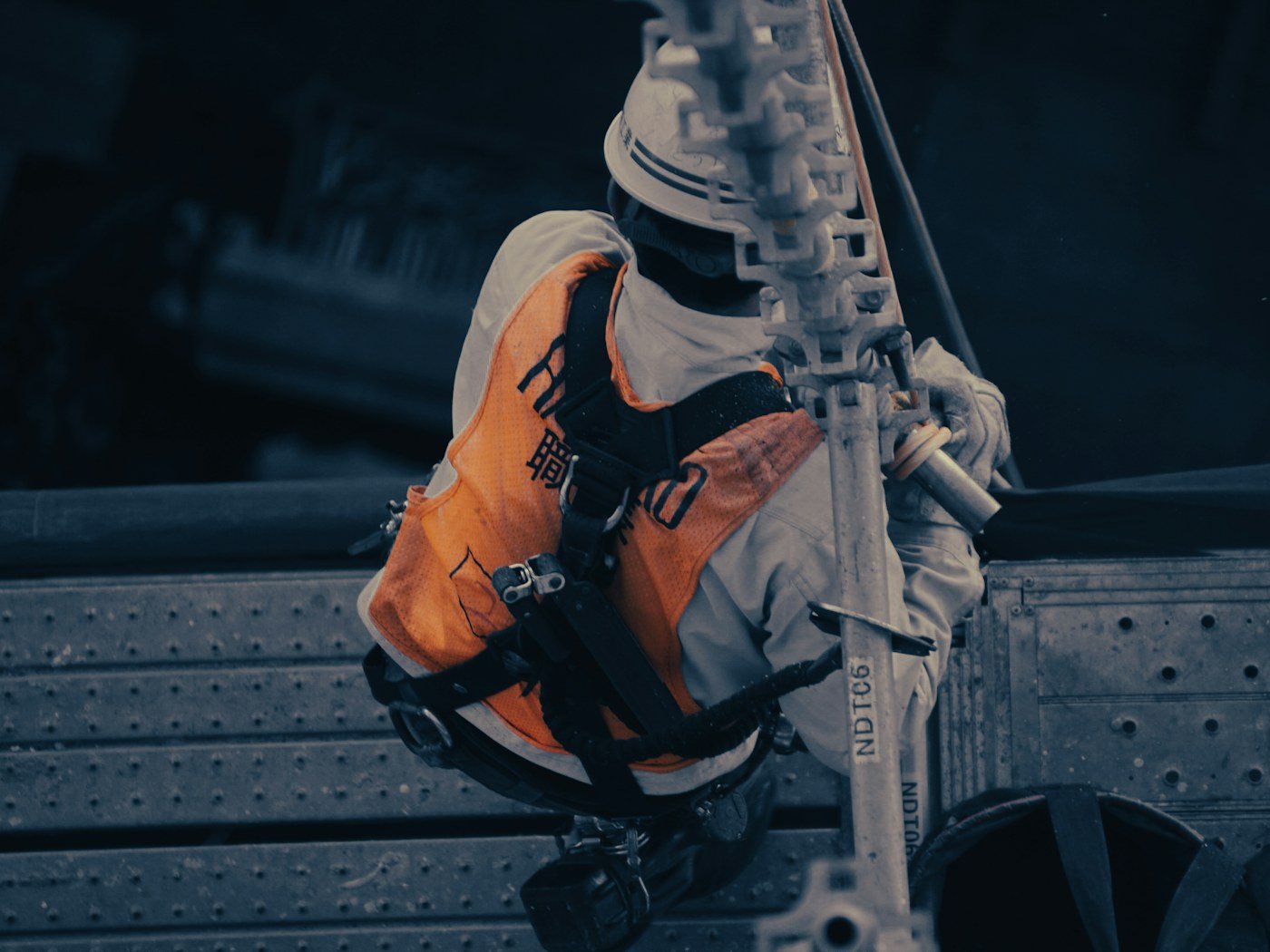
A self-retracting lifeline, often called an SRL, fall arrester or retractable block, replaces the fixed-length lanyard in a personal fall-arrest system. The spring-loaded drum keeps the line taut as the worker moves, and a centrifugal brake locks the drum the moment the line pays out faster than normal. Because the lock engages within a short distance, arrest forces and required fall clearance are lower than with a 2 m shock-absorbing lanyard, which is why SRLs are specified wherever clearance below the working platform is limited.
Across GCC sites, SRLs are used by steel erectors, scaffolders, tank and vessel inspectors, telecom riggers, solar module installers and crane maintenance teams. Aramco CSM, ADNOC HSE and most Dubai and Abu Dhabi main contractors require fall protection above 1.8 m, and an SRL is the usual answer where a vertical anchor is available overhead. Al Baraka Diyar supplies SRLs in site quantities from Ajman to sites in Dubai, Abu Dhabi, Saudi Arabia and India, with test certificates and inspection records for each unit.
Key features
- Certified to EN 360:2002 or ANSI/ASSP Z359.14-2021 Class 1 or Class 2 as marked
- Line options: 25 mm polyester webbing, 4.8 mm or 5 mm galvanised steel cable, or stainless cable
- Lengths from 2 m personal units to 30 m blocks for towers and tank work
- Energy-absorbing element limits arrest force to 6 kN per EN 360 and 1,800 lbf per ANSI
- Leading-edge rated versions tested over a steel edge for horizontal use at foot level
- Swivel anchor eye, carabiner and load-indicating snap hook reduce line twist and show fall history
Technical specifications
| Standards | EN 360:2002; ANSI/ASSP Z359.14-2021 (Class 1 / Class 2); CSA Z259.2.2 on selected models |
|---|---|
| Line material | Polyester webbing 25 mm, galvanised or stainless steel wire rope 4.8–5 mm |
| Working lengths | 2 m, 3.5 m, 6 m, 10 m, 15 m, 20 m, 30 m |
| Maximum arrest force | 6 kN (EN 360); 1,800 lbf / 8 kN peak (ANSI Z359.14) |
| Lock-off distance | Typically under 0.6 m total arrest distance per EN 360 testing |
| User capacity | 100 kg (EN) or 140 kg where marked; ANSI 130–310 lb total weight |
| Housing | Impact-resistant nylon or aluminium alloy with stainless internals; sealed units for offshore |
| Connectors | Steel swivel top eye; aluminium or steel double-action snap hook with fall indicator |
| Packaging | Individually boxed with manual and inspection log; carton of 4–6 |
Variants available
- Personal webbing SRL 2–3.5 m
- Leading-edge SRL-LE with cable line
- Twin-leg personal SRL for 100% tie-off
- Cable block 10–30 m with rescue hoist
- Sealed stainless SRL for offshore and marine
- Replacement line and recertification service
Brands we supply
Applications across GCC sites
structural steel erection and precast installation where overhead anchors are available
tank roof inspection, flare stack work and tower climbing at refineries and gas plants
tracker and inverter maintenance on elevated structures at utility-scale plants
overhead crane rail maintenance and silo access in manufacturing plants
trailer and container top access with twin-leg personal SRLs on rail systems
monopole and lattice tower climbing with cable blocks
What site HSE teams expect
In the UAE, Dubai Municipality Code of Construction Safety Practice and Abu Dhabi OSHAD Code of Practice 23 require fall protection where a fall of 1.8 m or more is possible. SRLs must carry CE marking under the PPE Regulation (EU) 2016/425 or ANSI Z359.14 marking, and buyers typically request the EU type-examination certificate and a declaration of conformity. Saudi Aramco CSM and ADNOC HSE standards commonly require third-party certification and a unique serial number per device.
SRLs are inspected by the user before each use and formally by a competent person at intervals not exceeding 12 months, with annual factory or authorised-centre recertification typical for cable blocks. Any unit that has arrested a fall, shows a deployed load indicator or has a damaged line is withdrawn immediately. Manufacturers generally state a service life of up to 10 years from date of manufacture subject to inspection; Gulf heat and dust often shorten webbing life.
How to choose
- Match line type to the job: webbing for light personal units, cable for abrasive, hot or leading-edge work
- Check fall clearance: SRLs need less than lanyards, but confirm the manufacturer's clearance chart for your anchor height
- Choose leading-edge (LE) rated units whenever the anchor is at foot level or the line could contact an edge
- Specify sealed stainless housings for offshore, desalination and coastal sites to resist salt corrosion
Frequently asked questions
What is the difference between EN 360 and ANSI Z359.14 SRLs?
EN 360 is the European standard limiting arrest force to 6 kN with a 100 kg test mass. ANSI Z359.14 defines Class 1 (overhead anchor) and Class 2 (foot-level, leading-edge) devices with higher capacity ranges. Many SRLs sold in the UAE carry both marks, which satisfies Aramco and ADNOC specifications.
Can an SRL be used horizontally at foot level?
Only if it is leading-edge rated and marked for foot-level anchorage. Standard overhead SRLs can fail if the line is cut over a steel edge during a fall. Leading-edge units use cable lines and an external energy absorber tested over an edge, and manufacturers give specific set-back distances.
How often must SRLs be inspected in the UAE?
A pre-use check by the worker every shift, a documented competent-person inspection typically every 6 to 12 months, and factory or authorised recertification annually for cable blocks. OSHAD and most main contractor HSE plans require inspection records on site and colour-coded tags showing the current inspection quarter.
What is the lifespan of a self-retracting lifeline?
Most manufacturers state up to 10 years from manufacture for the housing and mechanism, with webbing lines typically replaced sooner. In Gulf conditions, UV exposure, sand ingress and heat accelerate wear, so site units commonly need replacement or line changes within 3 to 5 years.
Do you supply SRLs in bulk with certificates?
Yes. Al Baraka Diyar supplies bulk quantities from Ajman with individual serial numbers, CE or ANSI certificates, user manuals and blank inspection logs. Delivery across the UAE is typically within days, with export to Saudi Arabia and India arranged with full documentation for client HSE approval.
Quote for Self-Retracting Lifelines (SRL)
Tell us quantity, sizes and delivery location. We reply with an itemised quotation and certificates within one working day.
Related safety products
Full-Body Safety Harness
A full-body safety harness is a system of polyester webbing straps that fits around the shoulders, chest, pelvis and thighs and connects a w…
Lanyards (Restraint & Energy-Absorbing)
Safety lanyards are short webbing or rope connectors that link a full-body harness to an anchor point, either restraining a worker from reac…

Horizontal Lifelines & Engineered Anchors
Horizontal lifelines are tensioned webbing or cable systems fixed between two or more anchors that let workers connect their harness and mov…
Need Self-Retracting Lifelines (SRL) for your site?
Send us the quantity, sizes and delivery location, or the client standard you must meet, and we will return an itemised quotation with certificates within one working day.